What does it mean to internalize a prejudice against Chinese Americans that we must distinguish from the conflated narrative of discrimination against Asian Americans writ large?
Even before I could articulate it, I felt the different political and economic realities afforded to my community. I grew up in Flushing, New York, a city with a very sizable Chinese working-class and immigrant population—almost half of Flushing’s population is Chinese and the median income in downtown Flushing, where most of its residents are foreign-born immigrants, is a mere $25,000.
My parents worked long hours and often on weekends, our house had dead rats stuck to adhesive traps every morning, and many of my fellow Chinese classmates couldn’t afford to buy enough notebooks for the school year. In the little time my parents shared with me, they spoke to me in Chinese, cooked me Chinese meals, and we celebrated Chinese holidays. But to someone who knew nothing else about the world, this wasn’t what it meant to be Chinese—this is just what life was. And yet, I grew up internalizing a very real prejudice against Chinese Americans that we must distinguish from the conflated narrative of discrimination against Asian Americans writ large.
In the 19th century, some of the first Chinese immigrants were brought to the United States as labor for the first transcontinental railroad, a chronicle of American imperialism that is historically and actively erased. As Manu Karuka writes in Empire’s Tracks, “To be a Chinese worker on the Central Pacific was definitively not to be a slave, the property of another. It was, however, a reduction to the status of a tool for grading earth and drilling a mountain. It was to be expendable, interchangeable, replaceable.”
The compulsory and exploitative nature of importing and reproducing Chinese laborers created unlivable wages for white Americans within California, rendering the Chinese monolith as a scapegoat for the landscape of American racial politics. And these sorts of cultural ethics inform the discriminatory laws and policies that serve to reinforce the harmful narratives that inspired them to begin with, creating a cycle of state-sponsored racism. As such, the Chinese identity in America today is hallmarked by a long history of formalized racial violence and humiliation. Historicizing Sinophobia sheds light on how Chinese Americans view their ethnic identity as well as their identity and value as individuals. From when we are as young as we can remember, we are taught to question our heritage and whether it’s something worth celebrating.
The ubiquity of the internet further shaped my understanding of Sinophobia in its representation in popular culture. My peers loved to discuss and consume Japanese and Korean media—their shows, their music, and their idols. When I played games online, it was common practice for players to use Japanese and Korean characters in their names or their favorite anime character or K-pop idol as their avatar, while very clearly not being Japanese or Korean themselves. But at the same time, Chinese media and culture never saw the same love, except from the occasional Chinese person. My experience seeing so many other Chinese people, myself included, falling in love with other East Asian cultures besides their own inevitably led me to internalize the idea that Chinese culture was simply boring, uncool, and undesirable—because surely there is something that makes all the Chinese kids around me flock to K-pop and anime.
As a result of the popularity of Japan and South Korea’s cultural exports and their political affinities with the United States, to be Japanese or Korean has become aspirational for many individuals, manifesting as a kind of blind-siding soft power that’s omnipresent online. Take, for example, Chinese makeup styles: it is common practice for Western social media users to repost makeup tutorials from Xiaohongshu, a Chinese equivalent to Instagram, onto other platforms and label it as “Korean” or “Japanese” instead, pointing toward a broader cultural distaste for China while simultaneously revering the West’s near-fetishistic virtue of being Japanese or Korean. This phenomenon extends beyond makeup, to the point where all varieties of Chinese media are attributed to either Japan or Korea.
Such aversion to giving China credit for its cultural productions can be explained by a history of Sinophobic indoctrination in not only America, but the West as a whole. While Chinese bodies were being devalued, exploited, and racialized for the construction of the Central Pacific railroad, anti-Asian sentiments were simultaneously and violently propagated. Through the racist and colorist metaphor of Yellow Peril, East Asians were painted as primitive, lesser, and hazardous to the Western world, but the growing Chinese population in the U.S. became specific subjects to Anti-Coolie taxes and the Chinese Exclusion Act, spelling out an ethos hostile to anything Chinese.
But growing up in America means continuing to learn and implicitly endorse Western historical accounts. There is very little room in the American educational system to think critically about what we are taught and in many cases, our education and media tell us how to think. After all, only 1.5% of Americans are Chinese, meaning the vast majority see little reason to oppose narratives that do not impact them. Beyond the insidious nature of historic oppression and discrimination pervading education and media, we might also confirm the continued prejudice against the Chinese diaspora with the age-old, blatant racial stereotypes: mocking Chinese people for eating dogs and cats, for their social credit scores, working in factories, censorship.
Of course, what the Chinese government does is neither inherently connected to the Chinese nationality nor to those of Chinese heritage spread across the global diaspora. How are Chinese American youth expected to separate these dysphoric ideas when they are harassed with stereotypes and outright racism that paint their Chinese identity as a monolith and puts them on trial for the actions of a government they have no relation to? How are we to find the words to protest this kind of xenophobic double standard that white Americans certainly don’t hold themselves to? When censorship, militarism, corruption, poor living conditions, and inescapable foreignness are the things Western media readily associate with “China,” it’s clear to see why the average person is hesitant to give Chinese exports any praise. On the other hand, Korea’s government, for example, pumps undisclosed amounts of money to subsidize their media, translating their globally popular media into a de facto standard towards which Asians aspire.
When the U.S. COVID-19 lockdown took place, a surge of anti-Asian, and specifically anti-Chinese, sentiment and violence ran rampant. Misinformation about the virus, its transmission, and its relation to China and the Chinese diaspora revived decades of anti-Chinese prejudice and daily stories of wanton violence against Asians and Asian Americans; it was a frightening time to be Asian, and especially Chinese. The most frightening part was not that I or a loved one could be assaulted on the basis of bigoted misinformation, but instead the fact that it was so easy for the world to blame and enact violence against global Asian diasporic communities who had no connection to COVID other than looking like those who live in an East Asian country.
Without a face to blame for all the adversity of the pandemic, people made a boogeyman of the East Asian diaspora to cope with the hardships they faced and created echo chambers to propagandize and convert others feeling lost. With China already being viewed in a poor light in the Western world, the stage was set for Chinese people to take the fall for the global pandemic. And more than that, it reinforced what Westerners had long believed about the Chinese: that we are dirty, eat pets, and carry sickness.
It’s very easy and even natural to neglect our duty to challenge the narratives we are fed, from the news we watch to the corporations we buy from and the ethics we endorse. It’s an infinitely more difficult task to think critically about everything we are presented with; we often have the privilege to ignore narratives that ostensibly don’t affect us.
But in reality, such apathy serves to uphold the status quo, thereby harming minorities. It’s only through our unified efforts that we can fight against systems put in place by those in power, and against structural whiteness. And when we fail to address all harmful narratives against the racialized and powerless in the U.S., not only do they become pervasive instruments of societal harm, but it also sets a precedent that keeps minorities divided. As a Chinese American, my fight against Western narratives does not end with its racist attacks against the Chinese diaspora but extends to its persecution and subjugation of all minorities.
Jason Tung is a contributing writer based in Seattle.
From the Ivy League to community colleges and from coast to coast, politicians and university administrators are proudly collaborating to militarize and repress the very spaces that we pay to stand on and learn in—those which are supposedly democratic terrains of free speech, free expression, and free inquiry.
By the Editorial Board
APR 29, 2024
On Thursday, April 25, a student protest encampment at Northeastern University established a liberation zone of our own, demanding that our administration disclose its financial investments, divest from Israeli companies and institutions that are funding the Gaza bombing campaigns, and denounce the ongoing genocide that has killed close to 40,000 Palestinians.
Northeastern’s solidarity encampment on Centennial Common followed this month’s encampments and sit-in protests at at least 100 college campuses across the country, with Columbia making initial headlines as its University President Minouche Shafik authorized the violent NYPD arrest of over 108 peaceful student protesters. At NYU’s first encampment, the NYPD pepper-sprayed and arrested 120 student and faculty protesters; in response to the administration’s subsequent construction of a plywood wall around Gould Plaza to prevent anti-war protests, the students, faculty, and community members—including the United Auto Workers Union—returned stronger than before. USC and UCLA sent in the LAPD to point assault weapons on their own students; Cal Poly Humboldt students forced out riot police from their own building sit-in; at Indiana University, snipers assumed position on the roof of campus buildings; in the south, Emory and Ohio State are the latest videos showing everyone from students to tenured professors being thrown to the ground, tased, and violently arrested by riot police for the anti-genocide demonstrations. Make no mistake: from the elite Ivy League to community colleges from coast to coast, politicians and university administrators are proudly collaborating to militarize and repress the very spaces that we pay to stand on and learn in, that are supposedly democratic terrains of free speech, free expression, and free inquiry.
Only about 48 hours after the set-up of our encampment, and despite Boston mayor Michelle Wu’s comments from the day before that the Boston Police Department wouldn’t be involved, the Northeastern administration invited state police in riot gear to arrest over 100 students and allies at the Gaza solidarity camp under the persisting conflation of anti-Zionism with antisemitism. For this brief but powerful moment of time, hundreds of Northeastern students bore witness to the development of a community here on campus within the transnational Palestinian liberation movement. In addition to peacefully demanding an end to Northeastern’s contribution to the Israeli apartheid regime, student organizers and community members shared food, danced, taught each other about the intertwined histories of settler-colonialism and empire. Most importantly, and with much gratitude to student organizers, we learned to protect each other.
As student organizations, faculty, and witnesses from that night—including ourselves—have already echoed: the participants of the encampment have never tolerated and explicitly directed against antisemitic hate speech of any kind. What Northeastern’s public statement as well as what the Boston Globe and the Huntington News referred to as “antisemitic slurs” were instead propagated by counter-protesters from the scene. But the facts don’t matter to Northeastern’s vice president of communications Renata Nyul, to the dean of students Chong Kim-Wong, or to the rest of upper admin.
The facts become obsolete as the veil of U.S. higher education institutions become lifted again: they are not truly concerned with the educational struggle for truth, nor with supporting the revolutionary histories advertised in their brochures and academic conferences. Students at Columbia have been proving to the entire world that while their university has long flaunted its history of learning from the 1968 anti-Vietnam War protests and capitalizing on the legacy of postcolonial scholar Edward Said, the administration is quick to repeat history in violently working with the state to suppress student mobilization. As the Columbia Spectator editorial board writes, “What is the role of the University if not to advocate for—and protect—its students?”
How are we expected to return to campus knowing that our administration has authorized the police to forcefully arrest our students, friends, comrades, and professors for peacefully protesting an ongoing genocide against the Palestinian people, which our university leaders remain supportive of? When the riot police first appeared on the first day of encampment, in broad daylight with crowds of bystanders watching, we linked arms and chanted, “We’re just students, what are you afraid of?” In other words: when the immediate impulse of the university—and every university suppressing student expression across the U.S.—is to bring in militant forces upon students calling attention to a televised genocide, what is it they are truly afraid of?
More than ever before, it should be painfully clear to everyone that neoliberal logics and representations of diversity will not save us from the structures of white supremacy and empire. This has already been made clear after the racialized murder of George Floyd in 2020 inspired corporate America’s $50 billion commitment to “racial justice” and the $8 billion profit-making DEI industry, merely reinforcing the nation-state’s capitulation to capitalism and commodifying non-whiteness under the liberalist veneer of diversity. It does not matter how many people of color are represented in spaces of power so long as they remain committed to upholding the transnational imperial project—this goes for our upper administrators at Northeastern and elsewhere, for Mayor Wu, for the bodies of cops that have entered our campuses in these past few weeks.
And more than ever before, this should serve as a reminder to students everywhere that your institution will not protect you—even if you are not a protester on the ground, even if you remain silent. Your indifference, or perhaps the distance you feel—whether to the violence on your college campus or to the ongoing violence in Gaza—will not save you; it will merely blind you until you realize you are disposable as soon as you fail to fall in line with the academy’s neoliberal values.
Illume speaks with Munawwar Abdulla, an organizer for the Boston Uyghur Association, on the CCP’s ongoing systemic campaign of persecution and genocide against Uyghurs and Tibetans.
By Yulia Murthy
APR 04, 2024
Photo courtesy of the Boston Uyghur Association.
On Feb. 5, 2024, in Harvard Square, Uyghurs and allies of the Boston Uyghur Association gathered to commemorate the Ghulja Massacre of 1997. Despite being a frigid evening, activists brought speakerphones to announce their speeches, and set up handmade signs and candles atop multiple chairs. There were signs that read “Free East Turkistan” and “No More Genocide.” Several people in the crowd waved the teal blue flags of East Turkistan.
On that commemorative day in 1997, peaceful demonstrations were met with excessive and violent force by the Chinese government, marking a turning point in the Uyghur people’s struggle for autonomy. Today, 27 years later, the Chinese Communist Party’s (CCP) oppression has intensified to alarming levels: a systematic campaign of persecution and genocide that demands global attention and action.
The gathering was organized by the Boston Uyghur Association (BUA), a group of Uyghur activists in the Boston area that create cultural events and raise awareness about the genocide in China. In January 2023, BUA held a rally against Thermo Fisher for unethical DNA collection practices targeting Uyghurs and Tibetans. They also organized a demonstration in front of the Massachusetts State House against the starvation genocide of Uyghurs amidst COVID-19 lockdowns. In the advent of the White Paper Movement of the pandemic, Uyghurs were being disproportionately cut off from accessing food and medications.
The Uyghurs, a distinct Turkic ethnic group indigenous to East Turkistan, have faced repressive policies from the Chinese Communist Party since their land was forcibly annexed in the 1950s. In 2014, President Xi Jinping launched the “严厉打击暴力恐怖活动专项行动 – Strike Hard Against Violent Terrorism Campaign,” unleashing a dystopian wave of invasive surveillance, non-consensual biometric data collection, and tightly controlled network of checkpoints throughout the region. Today, Uyghurs face detention without due process in “re-education camps,” often accused of non-criminal behaviors such as practicing their faith or maintaining contact with family abroad. These camps are forced cultural assimilation centers where Uyghurs are subjected to brutal torture, religious suppression, and forced labor. There are also many reports of sexual assaults, forced sterilizations, forced abortions, along with mass disappearances of thousands. It is estimated that 2 to 3 million Uyghurs are currently detained in these camps.
Propaganda and disinformation campaigns by the CCP downplay the extent of human rights abuses perpetuated against Uyghurs and paint a distorted picture of the genocide to Chinese citizens and to the outside world. Global companies currently using forced Uyghur labor in their supply chains, such as Apple, Uniqlo, Tesla, and Nike, are also not taking responsibility for human rights violations. Despite the Uyghur Forced Labor Prevention Act being passed by the U.S. House of Representatives in 2021, several corporations are not clearly disclosing their mapped supply chains, or are lobbying against the act. Information and censorship control in China also contributes to making labor auditing extremely difficult.
Faced with persecution and displacement, many Uyghurs have fled East Turkistan, seeking refuge in countries around the world. Within the U.S., it is estimated there are 10,000 settled Uyghurs. In the Boston community, the Boston Uyghur Association stands as a beacon of resilience against the genocide. Through rallies and collaborations with other human rights initiatives, the non-profit organization works tirelessly to preserve Uyghur culture through community events, raising awareness about the atrocities in China, and advocating for international action.
I spoke with Munawwar Abdulla, who organizes events and manages social media content for BUA, in an effort to learn more about the genocide as it stands today.
This transcript has been edited for length and clarity.
Yulia Murthy: Tell me about yourself: where are you from, what was your journey like, what brought you to work in Boston Uyghur Association?
Munawwar Abdulla: I’m Munawwar and I am from Australia. My parents migrated there from East Turkistan in the 80s and 90s (the political situation was already terrible back then), and then we moved to the U.S. so that my parents could work on Uyghur human rights issues—currently with [the] Uyghur Human Rights Project. I came to Boston for work—I’m in neuroscience, and after meeting with the Uyghur activist community here, we decided to formalize the protests/projects we were doing by forming BUA.
YM: For you and your coworkers that have family and friends in East Turkistan impacted by the acts of the CCP, are you able to maintain communication with them? If so, have there been any risks/challenges associated with staying in touch with family?
MA: My family hasn’t been in touch with our relatives in over seven years, I think, and we can only find out what’s going on with them through friends of friends who aren’t as outspoken as us. Early on when millions were being placed in camps, each location would need to fill a quota of people that needed to be detained, and so they cast a wide net of “crimes” including things like having contact with people abroad, or just having traveled before. Many people in the community were blocked and deleted and haven’t heard from family in years.
YM: What are the ways that the association helps refugees and orphans in East Turkistan? Does the organization help with receiving Uyghur refugees in Boston?
MA: We don’t really have any contact with people in East Turkistan because that will endanger their lives, so it’s very difficult to get them to come here to seek asylum or even send them donations. But we do send Zakat money to refugees in Turkey, as well as anyone who is struggling locally. We helped Uyghur asylum seekers in Boston by protesting in front of the Boston asylum office and meeting with the office director. Some individuals waited up to 10 years for their asylum case to proceed and now they all got approved after our appeal. 90% of the known asylum cases to BUA have all passed as of now. We also provide some financial aid to people who need it for their asylum cases. There are also some elder members of the community, artists for example, who were working back in East Turkistan but now have to start their lives all over again after getting stuck here—so we help them get cultural grants and such to help them get back on their feet.
YM: I’ve noticed that the Boston Uyghur Association has often partnered with/advocated for injustices happening in Ukraine, Tibet, Hong Kong, Taiwan, Iran, Belarus, Palestine, etc. In your opinion, what is the importance of movements advocating in solidarity with other movements for freedom in the world?
MA: Solidarity with other movements facing oppression and injustice should be common sense. Of course, we don’t all have the bandwidth to do everything for everyone, but there is a lot of overlap with our struggles. Mass incarceration and the technology used to implement that, surveillance tech, forced labor/slavery in global supply chains—global corporations are usually complicit in human rights abuses in multiple countries—the use of “war on terror” rhetoric; these are all directly connected if you trace the governments, companies, and contractors involved, even if the governments seem like they oppose each other. They all learn from each other’s playbooks too. And even with issues that are not directly connected, such as free speech, religious freedoms, and so on—although they may look different on the outside. For example, women in East Turkistan being forced to take off religious garments versus those in Iran forced to put it on, the core issue—freedom of choice—is the same, and we can learn a lot from each of our movements to stand against oppression. I also think those in power benefit from creating divides between those they oppress.
YM: What are some of the main challenges the association faces with its efforts? Has it been faced with islamophobia and racism in the past/present?
MA: One of the main issues we face is transnational oppression. The CCP has our family and friends hostage, basically. They have literally called our members and told them to stop talking about our issues otherwise their family members will be placed in camps, or they won’t allow them to contact each other. Recently one member’s little sister was put in prison—she was just a college student majoring in child education. That’s why most of our more outspoken members are those whose families are in different countries, or whose family members have already disappeared or have been in prisons for years now. It’s also why so many Uyghurs won’t speak out or join advocacy efforts, since their actions may be drastically harmful to their loved ones.
Another challenge we face is disinformation. The CCP puts in a lot of effort [into] their “Uyghurs are happy” propaganda, as you may know, and so we get people from all groups who don’t believe in what we’re facing. The U.S. government supports the [Uyghur anti-genocide] cause—when it’s advantageous to them—so a lot of Muslim countries are simply anti-Western and will support China in return for economic support, or some Muslim or left-leaning groups in America will just say it’s “Western propaganda.” Chinese people who support [the] CCP are always harassing Uyghurs who speak out, but that’s a given at this point. Since we’re Muslim, of course we have Islamophobes and racists who dislike us, although sometimes it’s a matter of whether they’re more Islamophobic or Sinophobic—either way, super problematic. And then of course there’s just the issue of a complete lack of awareness about Uyghurs, Central Asia, China, and the history there. So we’re in this awkward position where we have both suspicion and support from all sorts of groups.
YM: What are the ways that Uyghur communities now living outside their homelands maintain their culture and heritage for future generations (and in Boston specifically too)?
MA: One of the main ways is through opening up Uyghur language schools for kids on weekends. Through language we keep some of our history, heritage and culture, and it’s a way to create community for the children as well as the wider community when we host events for things like [the] New Year, Nowruz and Eid. And of course, education in the Uyghur language is being banned by China so it’s becoming more difficult to retain language even in our homeland. We’re also working on getting a community space so that we can have more gatherings to share food and learn about our culture by just being together and sharing experiences.
YM: What is your view on how the Uyghur genocide is represented in the media?
MA: When the media portrays the genocide, it’s interesting how polarizing and un-nuanced it can be. It’s also incredibly difficult to get images of Uyghur suffering, or even for journalists to go there to do real investigative work, unlike places like Palestine or Ukraine where people are able to share what’s happening live, and even then there are people who deny it. In China you have to use [a] VPN to get onto any social network that we’d be able to see in the West, and if Uyghurs are caught with that it will be grounds for imprisonment. And unless something like the White Paper Movement happens, Chinese social media is heavily censored as well.
I think because of the difficulty of seeing “evidence” from the people directly, there’s a lot of confusion and misinformation which leads to the divides that I mentioned earlier, and people end up basing their views almost solely on who is reporting rather than the actual evidence being reported. And if there are videos, it’s usually in Uyghur or Chinese, and there’s simply not enough manpower to verify and translate those videos, so that’s another huge barrier for the western public and journalists to access information. I think there’s a big issue of trust in the public. Nevertheless, it’s been great to see that our issue is even being covered. So many of us were used to just decades of explaining who we were. It’s sad that it had to get to genocide-levels of oppression for the media to catch on when the world could have helped prevent that if they’d listened to us earlier. I guess it’s the same situation with other communities too though.
YM: To conclude, what do you think are the best ways people in the Boston community can help support the effort?
MA: How to help! Actually, Free Uyghur Now came up with a great list recently. We also have some projects going on which you can find on our website. Donations will go towards keeping us afloat, printing signs and flyers, and providing help to local Uyghurs or to refugees in Turkey. Everyone at BUA are unpaid volunteers, of course.
As Munawwar has described, there are numerous ways to stand in solidarity with the Uyghur community:
Support collectives like the Boston Uyghur Association, Uyghur Human Rights Project, and the student-run Free Uyghur Coalition. You can support BUA in their frequent rallies, cultural events, and projects to volunteer for that they post on their Instagram page.
Raise awareness by sharing information about the situation in East Turkistan on social media platforms and to your networks. Amplify voices of Uyghur activists!
Demand action from your elected officials—call your Congressional representatives to support the “Uyghur Policy Act of 2023 (H.R.2766 / S.1252)” and the “Uyghur Human Rights Protection Act (H.R.1630)” bills.
Boycott companies that benefit from forced Uyghur labor and advocate for ethical sourcing practices.
The fight for Uyghur rights is a global responsibility. As there is great associated risk for Uyghur people with detained families to speak out, it is through international solidarity—of oppressed groups, worldwide allies, and dissident Chinese—that we can create enough pressure for the Chinese government to put an end to its genocide.
In the aftermath of the Court’s overturn of affirmative action using the co-optation of Asian American identity politics—and amidst other ongoing horrors of our world—who are the “bad Asians” today?
By Jesica Bak
MAR 01, 2024
Mad Men s4e9 (2010)
On Feb. 20, the Supreme Court denied the appeal to review Coalition for TJ v. Fairfax County School Board, a post-June 29th attempt by a grassroots group of parents to challenge a revamped admissions policy at a highly competitive public high school in Virginia. Previously upheld by the U.S. Court of Appeals for the Fourth Circuit, a new admissions policy at the Thomas Jefferson High School for Science and Technology—apparently implemented by the school board to [better] reflect the racial composition of the county’s public school system1—will remain in place despite being contested by the plaintiffs who argue that the new policy unconstitutionally discriminates against Asian American students.
But in Justice Samuel Alito and Clarence Thomas’s dissenting opinion, they argue that the circuit court’s decision to uphold the school’s new policy was an “elementary error” made by “elementary arithmetic” in holding that the new admissions process did not have a disparate impact on Asian American applicants because they were still overrepresented in the student body.
In fact, in utter agreement with the Coalition, Alito and Thomas make the tired and violent claim that the previous admissions system, predicated on standardized testing, was one of meritocratic means while the new one is a disruptive attempt at racial balancing that increased the percentage of white, Hispanic, and Black students while decreasing the percentage of Asian Americans. The framing is thus all too reminiscent of Students for Fair Admissions, Inc. v. President and Fellows of Harvard College in which the affirmative action opposers insist that the harm being perpetrated against Asian American students is purportedly predicated on the benefit of Black and Latinx students. Alito and Thomas’s dissent writes:
Asian-American students, many of whom are immigrants or the children of immigrants, have often seen admission to TJ as a ticket to the American dream… Under the old policy, each Asian-American applicant had a certain chance of admission. Under the new policy, that chance has been significantly reduced, while the chance of admission for members of other racial and ethnic groups has increased. Accordingly, the new admissions policy bore more heavily on Asian-American applicants.2
In our previous piece about the Court’s June 29th ruling overturning decades of affirmative action precedent, we argued that the entire notion of Asian Americans being injured by affirmative action at the alleged “benefit” of Black and Latinx students, needs to be reevaluated as a fallacy and more importantly, as a strategic attempt by the white hegemon to preserve whiteness at institutions that can otherwise provide powerful elevating opportunities for people of color. In that piece, we gratefully invoke scholars like Nancy Leong and Cheryl Harris, the latter of whom timelessly articulates3 that affirmative action is more than a policy of restorative justice, that it is an affirmation of the Black individual stretching beyond all spaces, and a democratic method of representing the underrepresented in institutions that claim power over our lives. Yet, as we gradually approach the marking of an entire year after that ruling, groups like the Coalition for TJ in Virginia are still celebrating and working in the wake of its legacy to “remain committed to ensuring equal opportunities for Asian Americans in our fight against discriminatory practices.”
I provide this lengthy context not to reiterate the same articulations I’ve made in last year’s piece—while I still argue that opponents of affirmative action have ahistorically and apolitically narratively positioned Asian Americans as the racial bourgeoisie4 in order to preserve the existing hierarchy of resources and opportunities for whites—but to instead examine the urgency of thinking about the ongoing discourse surrounding affirmative action in relation to the idea of the “bad Asian.”
I first came across this term with many thanks to a “Bad Asians” course at NYU this spring, taught by professor Michael Salgarolo, a historian of race, migration, and empire in Asian America. Within this course and beyond, students will analyze the historical construction of the “bad Asian” as a project of white supremacy and highlight Asian Americans as an insurgent presence in U.S. history. For professor Salgarolo, bad Asians are resistant and liberatory forces against U.S. empire, and range historically from freedom fighters to sex workers to border crossers. Nora Hui-Jung Kim, tracing South Korea’s sub-imperialism vis-à-vis Vietnam and the Vietnamese, also uses the phrase as she writes that this sub-imperial gaze was partly only possible because of South Korea’s neo-colonial exposure to American Cold War-era racial thinking that distinguished “good Asians” (allies) from “bad Asians” (communists).5
Encountering the duality of the categorical “bad Asian,” then, a rather binary spectrum in which Asian Americans can either be in service of the U.S. nation-state or in direct opposition to it, I find it urgent to take this historical positioning of the bad Asian and interrogate what that category may look like today—particularly as we attempt to contend with the aftermath of the Court’s overturn of decades of affirmative action precedent using the co-optation of Asian American identity politics; with the ongoing genocide against Palestinians in Gaza, with the descent towards authoritarianism in the U.S.; with other ongoing horrors of our material reality. In other words: who are the bad Asians today?
It’s a question not even Salgarolo himself has an answer for. In an interview with Illume, he told me that “[Bad Asian] is a relative term, and it depends on who’s doing the naming.” If you ask one side, they might tell you that, more or less, the bad Asian is the Asian alt-right male; if you ask the other, they might tell you that the category is comprised of boba liberals (or, as Salgarolo told me while chuckling, “I’m Filipino American, so we have ube liberals”).
But there is not a good Asian–bad Asian dichotomy wherein Asian Americans can neatly fall into either category—and part of this variability has everything to do with the trap of falling into a kind of political neutrality, a kind of moral complicity amidst the ongoing horrors of our world. It’s easy—and certainly not a coincidence that we fall into this trap—to believe that we are detached from transnational politics, that we have nothing to do with it. And yet, what can Korean Americans, for instance, make of the dual reality in which the very country we materially inhabit is actively backing the ongoing Israeli genocide against Palestinians in the occupied Gaza strip whilst across the Pacific, conglomerates in the country our parents are from, a land with which we also hold some spectral connection to, also have “innovative” profit stakes in ensuring the colonizer wins? When I asked Salgarolo whether the bad Asian might actually be the Asian American who just remains silent, he reminded me that such political neutrality from Asian American individuals and communities is an inextricable part of the U.S. colonial project such that the nation-state cannot survive without this silence:
“It’s very easy for Asian American politics to be very nonpolitical… A lot of folks have been paying attention to what’s happening in Florida, this gutting of the Black history curriculum and all these book bans,” he said. “Amid all that—where Black history is being erased from public schools—Florida also passed a bill that is going to mandate Asian American Pacific-Islander history in public schools. And so, what is it about Asian American history that Ron De Santis thinks is not threatening enough?… I think when we do focus our Asian American history education and cultural politics on visibility and representation, we can lose some political teeth.”
It shouldn’t be surprising, then, that the language Alito and Thomas use to refer to Asian Americans in their dissent—“minorities and the children of immigrants [whose] subsequent careers have in turn richly contributed to our country’s success”6—are perpetually in service of the nation-state and its desire to reject the philosophy underlying affirmative action. Such language, whether from whites or from Asian Americans themselves, is predicated on the myth of meritocracy as well as the process of depoliticizing Asian American politics into a framework that only celebrates visibility and representation. Reassuringly, part of the goal of Salgarolo’s Bad Asians course to combat such depoliticization is, in his own words, “to make Asian American history dangerous again.”
Jesica Bak is the editor-in-chief of Illume Magazine.
Matsuda, Mari. “28. WE WILL NOT BE USED: ARE ASIAN AMERICANS THE RACIAL BOURGEOISIE?” In Asian American Studies Now: A Critical Reader edited by Jean Yu-Wen Shen Wu, Thomas Chen and Jean Yu-Wen Shen Wu, 558-564. Ithaca, NY: Rutgers University Press, 2010. https://doi.org/10.36019/9780813549330-031↩︎
Kim, Nora Hui-Jung. “Forgotten Refugees and Erased “Multicultural” Subjects: The Vietnam War and South Korea’s Subimperial Nation-Building.” positions (2023) 31 (3): p. 599. https://doi.org/10.1215/10679847-10441273. ↩︎
The racialized love game between the Asian woman and the white guy—what can Celine Song’s critically-acclaimed Past Lives teach us about immigration and mourning an intimacy untouched by whiteness?
By Karissa Korman
FEB 27, 2024
Past Lives (2023), dir. Celine Song
In June, my friends and I left our sluggish corporate internships and met up at the AMC in downtown Boston to see Celine Song’s Past Lives. We’d been witnesses to an influx of promotional material for the movie that summer: short social cuts on TikTok about a Korean Canadian woman, her old flame Hae Sung from Seoul, and her third-wheeling white husband. As a group, I thought we hit the film’s target demographic right on the head—all young Asian women, one or two generations into American citizenship, a few better-off-forgotten relationships (from our past lives, if you will) under our belts.
On a Monday night in the middle of the quiet season in the city, when the neighboring Emerson and Suffolk students jump ship until fall, the ridiculously cavernous theater (visually and spiritually akin to a Las Vegas casino, or a Cheesecake Factory) was empty save for my friends and a handful of other Asian girls—on dates with their white boyfriends.
“Wasn’t it weird for them?” said one of my friends when we left. “Couldn’t they read the room?” she was asking. I agreed with them and their derision for the theater’s unexpected pairings, even though I knew that of all people, I had precariously little ground to stand on.
I couldn’t bring myself to ask on the Green Line platform, but I wondered if my friends felt as doomed as I did about Past Lives, like Song had invoked my name on-screen without my permission. I was an immigrant too (on a debated technicality; I was a Chinese adoptee to white Americans). Like the film’s protagonist Nora, I couldn’t really speak my native language (see: “adoptee from China”), and I’d also dated a white guy and run into all the strange, outsized geopolitical anxieties that came with it. But on the train home, I settled for laughing at the irony and saying the others just must not have seen the ads.
I was toeing dangerously over the border between self-deprecation and outright hypocrisy, but our less-than-keen observations about the other summer leftovers who’d gone to watch an earnest white guy lag behind his film’s first- and second-billed Korean leads were a product of a kind of pattern recognition that would be myopic to disregard.
Past Lives had Nora and her husband Arthur. And the 1960s had Yoko Ono and John Lennon. American soldiers spent the latter half of a century bringing their war brides (from Japan in the 40s, Vietnam and Korea in the 50s, and Vietnam again in the 60s and 70s) back home to meet the parents. Mark Zuckerberg married fellow Harvard student Priscilla Chan in 2012, the day after Facebook went public. Indie teenagers keep tabs on beabadoobee and the tall untanned boyfriend who’s taken residence in her Instagram stories—hairpin triggers for accusations that she’s unwittingly fallen prey to Yellow Fever from commenters who fantasize about dating her themselves. Even Capitol Hill has freakish Republican twin flames Mitch McConnell and his wife Elaine Chao—the first Asian American woman to serve in a presidential cabinet but only one in a line of many Asian Other halves, in a fraught history and inheritance we’ve learned to recite by heart.
Somehow less a matter of “colorblind” romantic happenstance than a mess of racial and sexual politics, the metaphysical Asian woman and white man of our cultural imagination has evolved into a damning match made in heaven. In this arranged meet-cute, a white guy manifests his exotic fantasy into a souvenir girlfriend, and an Asian girl gives in to his looming imperial sway, somehow a traitor to her race and a hapless, stupid victim at the same time.
An Asian girl and a white guy—we know when we see it, and we seem to know exactly what we think about it when we do. But seldom do we interrogate exactly what it is we’re looking for in these couples.
It’s difficult to breach the subject of Asia and America’s long-term historic relationship without invoking the names of movies that spanned the 20th century and helped to encode the sexual racialization of Asian women into our American imagination. Hollywood films like Sayonara (1957), The World of Suzie Wong (1960), and Full Metal Jacket (1987) latched onto perverse tropes meant to mirror white American attitudes toward Asians at home and abroad: simultaneously provocative, submissive, and sinister Asian women who sought to dominate and be dominated by white hegemonic masculinity paired with Anglo-American men who enlisted in the military and carried out their duties as the purveyors of good over Asian women, their foreign countries, and their exotic bodies.
The West has long since been invested in the romance of this “Far East Orient” and its violent climax in imperialist American militarism in Asia and the Pacific Rim, figured for decades as sexual exploitation and subjugation. The successful hyphenation of Asian women as Asian-American is reliant upon shows of obedience to white Westerness and masculinity, an always-on, impossible piety meant to soothe Orientalist anxieties about our supposed sexual infidelity and political deviancy.
On- and off-screen, Asian women are triply subordinated at the intersection of sex, race, and imperialism, and whether we like it or not, this kind of historical inheritance becomes almost impossible to forget in our relationships with white men, whom history would have cast as our mutual Yellow Peril.
The accusations—from white people, Asian men, other people of color, and even from among Asian women ourselves—about why these couples get together are as predictable as the pairing itself. Self-hatred, internalized racism, a Freudian second-generation parental hang-up, a sick and twisted secret desire to participate in some kind of Lotus Blossom fetish porn. Tying all of these hypotheses together is a vision of Asian women circumnavigating the world of whiteness, its men, and the privilege they must promise. Whether they’re war brides stealing patriotic enlistees from their forlorn fiancées at home, exotic prostitutes making a buck off of American G.I.s, local women cashing in on men’s sexual tourism sprees through Asia, or too-smart Model Minorities climbing the ladder, Asian women have always posed a corruptive threat to the “goodness” of America.
It’s difficult not to succumb to the allure of intimating a proximity to whiteness, especially for a group of people who experience a kind of xenophobic racism known as “Perpetual Foreigner Syndrome,” which imagines Asian Americans as forever foreigners and innately Other to Americanness.
I was raised in Tennessee with a white last name and the parents to match, but at eighteen with a blond-haired, blue-eyed boyfriend—a statistical inevitability in a town that was almost 90% white—I’d still managed to inherit Asian women’s generational curse. It seemed like my connection to a white man, the one thing meant to rescue me from my perpetual foreignness and fated exotic promiscuity, was its own self-fulfilling damnation.
Around this time last year, I went on a date with a Chinese American guy who’d moved to Boston from California, which I imagined naively as some kind of diverse, pan-Asian mecca. He wanted to go to a cartoonish country-themed bar outside Fenway Park, saying it was line dancing night, so we had to go. About halfway through a generic conversation about spending Chinese New Year in Manhattan, he unceremoniously asked me if I had any exes. I must have made a face, because he dropped, “Oh, was he white?” as a follow-up question, which I thought was awfully judgemental for someone who wanted to go to an over-decorated Cracker Barrel that sold alcohol.
“Great,” I told my friends when I came home. “He probably thinks I hate myself.” We didn’t go out again.
In the past, I would’ve rolled my eyes and assured any naysayers that even my teenaged self had the sense to differentiate between my status as a girlfriend and a fetish. But the news cycle from the last few years alone is wretched proof enough that some fears are healthy to hold onto, if only for our base survival. It turns out that a legacy of sexual imperialism is tough to shake.
In an essay for The Cut, author Elaine Hsieh Chou described overhearing two white men divulge to each other how to successfully get Asian women (nationality notwithstanding—they’re all interchangeable, after all) into bed with them. On a train in Taipei, they’d assumed no one around could understand them.
Eight years later, Chou was living in New York and working on a novel about a Taiwanese American woman with a complicated relationship to white men—“She is both attracted to them and disgusted by her attraction,” she wrote. Chou’s research took her to sluthate.com, a forum where she stumbled across a white man who fantasized about raping his half-Japanese teenage daughter, christened on the website as a “little geisha fuck doll” and “little neo-colonialist jewel.”
On another forum, Chou found a post from a white man asking if he could still call himself a white nationalist if he wanted to fuck Asian women at the same time. “In the replies, men advertised us like an infomercial, touting our supposed pros over cons: ‘their pussies are really tight’; ‘their skin feels so nice’; ‘they open their legs easy,’” Chou wrote. Another blog declared that Asian women were bound to be enslaved to white men. The manifesto ended with the commandment: “If an asian woman becomes old, ugly, out of shape, disfigured, or diseased, then she should be divorced, abandoned, sold to someone else, or sent back to China or wherever she came from; and the White master can go back to Asia and pick out a new asian woman to replace her.”
In 2021, a man traveled to three spas in the Atlanta area and killed eight people, six of whom were Asian women. He told the police himself that he had a “sexual addiction” and murdered the women in the parlors to eliminate his “temptation.” In the months following the shooting in Atlanta, Stop AAPI Hate, a national coalition that gathers data on racially-motivated attacks, found that Asian women reported 63.3% of all recorded hate incidents—that’s over twice as often as Asian men. In 2022, Michelle Alyssa Go was pushed into an oncoming Times Square train. Another man in New York assaulted seven Asian women in two hours. Manhattan police found the body of Christina Yuna Lee in her apartment—she’d been followed home, stabbed to death and left half-naked in her bathtub.
Later that same year here in Boston, a 64-year-old Asian woman was kidnapped outside a train station by a man who strangled and repeatedly sexually assaulted her before leaving her in a mall parking lot. According to a transit police report, the man had tried and failed to kidnap a different Asian woman just 10 minutes earlier at the same station.
During this period, I was one of only a few Asian editors at my student-run newspaper, and reports on the rape of Asian women was quickly becoming my beat. The turnover was exhausting me. I’d tried explaining the impact to my then-boyfriend, who was politically liberal and tried his best to be personally sympathetic, but the gnawing awareness that he would never truly be fluent in the language I was speaking to him was becoming its own weight to bear.
The boundary between the racialized love game between Asian women and white men and any coincidental visible subscriptions to it is far from concrete. But I worry that discourse about whether or not beabadoobee’s boyfriend has an Asian fetish (probably not)—or even Mitch McConnell (probably)—misses the crux of what Asian Americans tend to recognize universally as an issue in favor of diagnosing the Asian woman at hand with an illness of her own that she caught by getting with someone so obviously ill with “Yellow Fever.”
It’s more than likely that the couples seated in the auditorium for Past Lives couldn’t all be followers of this kind of perilous binary set-up that must exist in explicit terms between Asian women and white men. And certainly Celine Song, an immigrant to Canada from South Korea—and one half of a multiracial marriage—herself, knew how to tread around Nora and her husband.
Nora, played by Greta Lee, and her husband Arthur, played by John Magaro.
Deceptively simple, Past Lives is, after all, a story about immigration and the past lives we forget to mourn before it is a romance about star-crossed lovers or an opportunity to punch up at goofy white guys with much cooler Asian wives. I burst into tears just before the credits rolled in the theater—when Nora sends her childhood sweetheart off to the airport in a taxi and walks back to her husband in tears—because Greta Lee is just that good an actress and that contagious a cryer. Even though we poked fun at the irony of it all on the train home, my friends’ mascara was smudged and dried up around their eyes, leftover evidence of some kind of shot through the heart we couldn’t quite recognize in the moment.
I really didn’t want to like Nora’s white husband in Past Lives. It was my first summer out of a relationship with a white guy, and I wasn’t eager to succumb once more to another one—even if he was ultimately decent, probably Yellow-Fever-free, fictional, and important to the story at hand. My friends and I had left the theater oohing and aahing over Greta Lee’s perfect bob and Teo Yoo’s general face, with quiet acknowledgements that John Magaro’s Arthur wasn’t so bad. It felt traitorous to admit that, out of all the odd-throuple’s tense, loaded language (in English and in Korean), it was Arthur’s words that were eating me up inside.
“You dream in a language that I can’t understand,” he tells Nora one night. “It’s like there’s this whole place inside of you where I can’t go.”
When we got home, I told my friends that I’d had a near identical conversation with my ex-boyfriend. I wasn’t in the habit of revealing much about that relationship then, and my friends looked at me with a mix of pity and political disbelief that made me wish I could go back in time and repeat it to the guy at the line dancing bar, just to see his face.
Until the plot of Past Lives catches up with her, Nora has spent her entire adult life putting off grieving for the life she lost when she moved from Korea to Canada, covering up whatever holes might be left with English fluency, a flowy wardrobe from The Row, and a white husband. Nora was 12—old enough to walk away with memories intact, but too young to remember how to write with her native alphabet or speak with an unaffected accent—when she immigrated to the West, whereas I was a baby with very little life to leave behind me. But Past Lives caught me, too, busy putting off my own what-ifs had I grown up in China and never become a hyphenated American, sheltered in Anhui miles and miles away from any Western immigration point and the men who lied beyond it.
The diasporic nature of Asianness leaves us all suspended somewhere between here and there, or then and now. And regardless of who we love, growing into an Eastern body in a Western world leaves us dreaming of a language we can’t speak ourselves. There is a whole vacant place inside of us where we can’t go, somewhere unscorned and untouched by whiteness and its imperial hand—so we make do with spectral mourning and make our peace with our other halves.
The sanitization of Israel–Palestine coverage spans from U.S. censorship to dangerous incitement of violence against journalists on the ground in Israel and Gaza.
By Juliana George
FEB 20, 2024
Writers’ Bloc activists overtook the New York Times lobby waving imitation newspapers scrutinizing the paper’s coverage of Gaza. Photo courtesy Luigi Morris.
On Oct. 30, 10 days after he announced his departure from the Boston Globe, journalist and Pulitzer Prize finalist Abdallah Fayyad tweeted that an op-ed he had written about the war on Gaza was shot down by a higher-up at an unnamed publication. Fayyad said the piece was “not at all radical or incendiary or offensive” and simply advocated that Congress call for a cease-fire in Gaza in light of the staggering civilian death toll. Fayyad was not given an explanation for the decision, but to him, it wasn’t hard to imagine why the op-ed was rejected—he cited a “culture of fear in newsrooms” surrounding Israel–Palestine and also suggested the choice was likely related to his identity.
Fayyad, who is Palestinian American, opines that many Palestinian, Muslim, and Arab journalists face extra pressure to sound neutral on Israel–Palestine. More than that, he asserts that this standard is not equally applied to Israeli and Jewish American journalists.
“When you see a byline with somebody with a name like mine, you will assume that they are incapable of being objective on [Israel–Palestine] because of their background,” Fayyad said. “Meanwhile, our newsrooms have no problem citing Israeli newspapers and hiring Israeli writers and freelancers. It’s hugely lopsided which voices are elevated, especially in moments of crisis like this and especially in the early days of this particular war.”
The numbers don’t lie: in 2020, a +972 Magazinearticle found that just 46 of the 2,490 New York Times op-eds on Palestine since 1979 were written by Palestinians, equivalent to less than 2% (though the numbers have recently been increasing). But while Fayyad maintains that the issue of censorship on Israel–Palestine is more pronounced for Palestinian, Muslim, and Arab journalists, he also emphasized that the silencing of pro-Palestine voices in the news media is an industry-wide issue.
The sanitization of Israel–Palestine coverage spans from US-based news organizations that limit the free speech of pro-Palestine journalists to dangerous incitement of violence against journalists on the ground in Israel and Gaza. The phenomenon even extends to the sources and language that Western media organizations choose in relation to Israel–Palestine. Although most newsrooms allege that objectivity is their most universally held value, mainstream coverage of the war on Gaza tells a different story.
Fayyad is not the only journalist who has indicated his skepticism about how the mainstream media reports on Israel–Palestine. On Oct. 26, Writers Against the War on Gaza (WAWOG), a coalition of writers, journalists, academics, artists and other culture workers, published an open letter with more than 4,000 signatures condemning Israel’s genocide campaign against Palestinian civilians in Gaza as well as the mainstream media’s portrayal of the war. In another letter, published Nov. 9, more than 1,400 journalists denounce Israel’s killing of journalists and criticize Western newsrooms for unbalanced coverage.
Many of the journalists who signed these letters swiftly faced retaliation from their employers. One signatory of the WAWOG letter, award-winning New York Times Magazine staffer Jazmine Hughes, resigned from the Times under pressure from the publication’s editor-in-chief, Jake Silverstein. She said she was “largely denied [New York Times] Guild representation.” The New York Times Guild, part of the NewsGuilds of New York, represents over 1,400 editorial, tech, and media professional workers in the newsroom. Jamie Lauren Keiles, a contributing writer at the Times Magazine, resigned the same day in anticipation of similar disciplinary action given that his position did not have Guild protection. As media companies promptly reminded staffers of their social media policies—Hearst Magazines warned employees that “even ‘liking’ controversial content could result in their termination”—more than 30 journalists who signed the Nov. 9 letter have already removed their names in fear of retaliation.
At the Los Angeles Times, where nearly 40 journalists who signed the WAWOG letter were suspended from reporting on Israel–Palestine for three months, the ban disproportionately impacted Palestinian, Muslim, and Arab staffers. This prompted the Los Angeles chapter of the Council on American–Islamic Relations (CAIR-LA), a Muslim civil rights advocacy group, to send a letter to the Times’ executive editor, Kevin Merida, stating concerns about the possible effects on coverage of the war.
“While we understand the importance of newsrooms attempting to maintain impartiality, we believe that suppressing the voices of journalists who are directly affected by the events they cover is counterproductive,” wrote Enjy El-Kadi, digital communications manager at CAIR-LA, in an email. “This decision may strain the relationship between the LA Times and [the Palestinian, Arab, and Muslim] communities, potentially undermining the newspaper’s credibility as a source of information for diverse populations in Southern California.”
The question of whether journalists should be able to disclose their personal beliefs about the war on Gaza is part of a larger debate on objectivity that big names in journalism have been arguing about for years. Ever since newsrooms have begun to diversify, many—mostly younger—journalists have challenged the notion that objectivity was ever really present in journalism given the long legacy of discriminatory coverage toward marginalized groups.
Mari Cohen, an associate editor at the progressive Jewish magazine Jewish Currents who also signed the WAWOG letter, expressed exasperation that many of her fellow signatories were penalized by their employers in the name of what she dubbed the “so-called objective perspective.”
“Historically, this idea of journalistic objectivity has privileged a certain type of white male voice as the supposedly objective voice,” she said. “People who [speak] up for a less dominant perspective, for racial justice or for Palestinian liberation, [receive] more scrutiny.”
Conversely, a lot of journalists consider expression of personal beliefs in any capacity to run counter to the journalistic purpose. Al Tompkins, a senior faculty member at the Poynter Institute in St. Petersburg, Florida, advises journalists against all partisan statements, from open letters and social media posts to bumper stickers and yard signs.
“When you become an activist, you are saying to the public, ‘Look, this is my personal belief and you should filter everything I say and do around this belief.’ I just think you’re undercutting your own credibility with the public when you do that,” Tompkins said. “The single best thing you can do for all things you believe in is to be a great journalist, to seek truth and tell it right. But when you stake out an editorial position, you’ve just dismissed yourself from being a part of that news coverage.”
Most journalists agree that their guiding principle should be to seek truth and report it, but Fayyad thinks that accusations of “activism” in the newsroom are more common for journalists who come from underrepresented communities.
“If you talk to a lot of journalists from marginalized backgrounds, they will tell you that at some point in their career, they were labeled an activist rather than a journalist by some of their white newsroom colleagues,” he said. “When a journalist is from a marginalized community, be they a Black journalist, a Latino journalist, an Indigenous journalist, or a Palestinian journalist, and they write factual statements that make people uncomfortable, those are not often viewed as the objective truth in spite of being backed up by a lot of evidence and academic papers and statistics. Those truths and the way we express them is seen as political.”
The quotes and replies of Fayyad’s Oct. 30 tweet include several users, both with and without journalism backgrounds, claiming to have heard comparable stories from other writers. Fayyad’s negative experience while freelancing after he left the Globe was luckily not repeated, and he has since joined Vox as a policy correspondent. However, as more journalists encounter similar silencing tactics, the principles behind the “objectivity” most newsrooms comply with continue to be tested.
Mourners react as they attend the funeral of Al Jazeera cameraman Samer Abu Daqqa, who according to the Arabic broadcaster was killed by an Israeli drone strike. Photo courtesy REUTERS/Bassam Masoud.
Same Playbook, New Victims
“You shouldn’t work on this because you’re Palestinian.”
In a Nov. 17 thread posted to X, formerly known as Twitter, Palestinian American journalist Soraya Shockley recalls a racist comment by a colleague from when they served as an audio producer at The New York Times. The remark was in response to concerns Shockley raised about the framing of an episode of “The Daily” that they were working on in May 2021 about the recent escalation of violence against Gaza. The editor was not reprimanded. A month later, Shockley sent out an internal memo to the Times’ podcast series “The Daily,” the international desk and the Arab employee resource group outlining the problems with the episode and proposing ways to curb future bias. Based on the current coverage by the Times, Shockley was disappointed to see that after two and a half years, their advice was not heeded.
Some of the problems Shockley raised in the memo include insufficient distinction between Palestinians, Arabs, Muslims, and Hamas; the title, which called the 73-year occupation “reignited”; the use of the phrase “properties they left” to describe the homes Palestinians were forcibly removed from; and glaring differences in language utilized to depict Israeli airstrikes, which were referred to as “inevitable,” as opposed to Hamas–fired rockets, which came in “barrages” that “stream[ed] out of Gaza and slam[med] into Tel Aviv.” These kinds of language choices are still highly prevalent in mainstream coverage of the war on Gaza.
The main offender on the episode of “The Daily” that Shockley critiqued was Isabel Kershner. Kershner is a Jerusalem–based Times reporter who has come under fire before for neglecting to disclose that her husband holds a position in the controversial Institute for National Security Studies (INSS), an Israeli security think tank charged with encouraging “disproportionate force” by the Israel Defense Forces on civilian populations after the 2006 Lebanon War. Kershner would also occasionally use the INSS as a source without disclosing her relation to the organization. Aside from a mild scolding from former Times public editor Margaret Sullivan in 2014, Kershner has largely escaped retribution for her public stance, unlike her Times Magazine colleagues.
But this type of bias isn’t limited to Israel–Palestine, nor is it confined to the United States—journalists abroad risk physical harm when they speak out about US-backed wars. In a recent blog post, Beirut, Lebanon–based freelance journalist Séamus Malekafzali draws parallels between media tactics exerted to justify the war on Gaza and post-9/11 propaganda that dehumanized Arabs and Muslims during the Iraq War.
In one example, Malekafzali brings up allegations of misinformation made against Al Jazeera by US officials, including former Secretary of Defense Donald Rumsfeld and former President George W. Bush, as well as the US missile attacks on Al Jazeera offices in Kabul, Afghanistan and Baghdad, Iraq in 2001 and 2003. He compares these instances to the threats international journalists recently received from Prime Minister Benjamin Netanyahu and former Israeli envoy to the United Nations Danny Danon after the Israeli media advocacy group HonestReporting accused these journalists of having prior knowledge of the Oct. 7 Hamas attacks on Israel. The Israeli government has also attempted to shut down Al Jazeera offices in Israel, although this has not been successful so far.
According to New York City-based NGO the Committee to Protect Journalists, as of Dec. 23, 69 journalists and media workers—62 of whom are Palestinian—have been killed in the war since Oct. 7. The Gaza media office estimates a higher death toll of at least 100 media practitioners, while not all of the deaths are confirmed. Some journalists have died from Israel’s indiscriminate airstrikes, but some were more targeted, as in the case of Lebanese Reuters journalist Issam Abdallah, who was fired at from an Israeli tank. Journalists in the region have also faced assault, arrest, threats and censorship at the hands of the Israeli government and the Israel Defense Forces.
“The groundwork of this targeting was laid during the Iraq war, when news organizations that showed American atrocities were branded as accessories to terrorism,” Malekafzali said. “But Israel has taken that to a very literal point and has made Gaza the deadliest place for journalists, if not this year, than certainly in many years.”
There’s no need to wonder what purpose this violent censorship serves. As reported by Politico, the Biden administration was cautious that the temporary six-day cease-fire that began Nov. 24 would allow journalists to enter Gaza and “turn public opinion against Israel” by virtue of the large-scale death and devastation. Public support for Israel is already declining in the United States, and Malekafzali believes this is in part due to the distressing nature of images coming out of Gaza and the fact that it was far easier to suppress similar content in the 2000s than it is today.
“Just recently, there was a video of premature infants that had been left in incubators in a hospital that Israel had told Palestinian doctors to evacuate, and they had just been left there to die,” he said. “These images will continue to come out and their exposure to American news audiences might be limited, but they do get out there and I don’t imagine that the [temporary] cease-fire is going to reverse the trend of public opinion as it is now, where support for a [cessation] of violence is increasing.”
The Palestinian Exception
When Keiles resigned from The New York Times Magazine after signing the WAWOG letter, it wasn’t the first time he had reconsidered his affiliation with the institution. Back in February, he signed an open letter written by a collective of Times staffers and contributors criticizing the publication for its coverage of transgender and gender nonconforming people, which he was reprimanded for. In both instances, he wasn’t sure what was expected of him as a contributing writer—he wasn’t reaping the benefits, labor protections, or union representation he would have if he were a full-time employee, so why should he behave as though he was?
On Dec. 1, Keiles tweeted screenshots of an email sent to all New York Times freelancers with the subject line “Ethics Reminder for Times Freelancers.” The email strongly pushes freelancers to “adhere to the same standards as Times staff members,” with the rationale that readers are likely not differentiating between the work of freelancers and staffers. In the thread, Keiles referred to this circumstance as “a potential [New York Times Guild] misclassification concern” and elaborated over the phone that freelancers being held to the same standards of conduct as full-time employees should have the right to enjoy the same benefits.
“When people picture a journalist, they picture someone with a job. But it’s actually like someone that’s more similar to an Uber driver,” Keiles said. “I think the Times sort of exploits the freelance loophole as a way to avoid offering benefits or labor protections to a lot of people that work for them.”
Keiles also voiced frustration about the vagueness of the New York Timesethics handbook, which is similar to the policies of many other news organizations. He suspects that this ambiguity is intentional, so that Times editors and higher-ups are given free reign to decide how and when these rules should be implemented. For example, in the “Participation in Public Life” section of the handbook, the Times requests that staff members refrain from attending marches or “lending their name to campaigns” with the ambiguous caveat “if doing so might reasonably raise doubts about their ability or the Times’ ability to function as neutral observers in covering the news.”
“The thing that feels the most unfair to me is not the fact of a policy, but the fact that it’s so unclear and that at any point someone can be retaliated against,” he said. “I think even someone that is not being affected by the speech conversation around this war may be affected by these similar working conditions on the next issue. It would be naive to write this off as something that’s self-contained [to] this conflict.”
Keiles is certainly right, but it’s undeniable that Israel–Palestine is especially vulnerable to what Fayyad termed a “culture of fear in newsrooms.” Cohen of Jewish Currents attributed the “except for Palestine” rule to powerful pro-Israel lobby groups that seek to influence politics and media, such as the American Israel Public Affairs Committee (AIPAC).
“There’s a lot of organizations that lobby very hard to push institutions and news organizations to say that any anti-Zionism or criticism of Israel is antisemitism, and they’re very well organized,” she said. “I think that news outlets are extra cautious and extra inclined to punish their staff on [Israel–Palestine] because they’re scared of getting backlash from those organizations.”
The repercussions experienced by journalists who have spoken out during this war—and the hazy, often arbitrary rules that try to prevent them from doing so—will no doubt spark more conversations about free speech and contingent labor rights, but the actual coverage needs a reckoning too.
Disinformation has been rampant since Oct. 7, and many Western journalists and news organizations have failed to challenge these rumors before reporting on them. The account that Hamas had beheaded 40 babies, which even the Israeli army did not confirm, was widely reported on after President Biden falsely suggested that he had seen pictures of the tragedy. More recently, a Washington Postinvestigation found that there is no proof of the Israeli government’s contention that a major Hamas command center was located in the tunnels below al-Shifa Hospital. This claim essentially gave Israel license to launch an assault on the hospital with impunity, which would ordinarily be against international law. Up until now, many news organizations did not dispute or even call into question the IDF’s shaky evidence, even though it could not be verified.
Western news organizations often report without a critical eye on disproven or unsubstantiated assertions made by Israeli officials while casting doubt on Palestinian sources by closely aligning them with Hamas, specifying the “Hamas–run” Gaza Health Ministry or shrouding civilian death toll statistics supplied by Hamas in doubt. It’s fair to cast suspicion on statements made by groups that likely have an agenda, but certainly not in an unbalanced way.
“It would really be befitting of Western journalists to research what Israeli representatives give them to cross check, to follow up and not to immediately give these things credence in the nightly news broadcast,” Malekafzali said. “[For news consumers] I think it’s important to follow both pro-Israel and pro-Palestine news organizations, because you need to be able to detect where narratives match up [and] where they diverge. Exposing yourself to lots of different information sources will allow you to make an independent, reasoned assessment on who is telling the truth.”
Juliana George is the managing editor of Illume Magazine.
Illume speaks with Mariam Hassan, Egyptian American activist on the Palestinian liberation and solidarity movement.
By Juliana George
FEB 19, 2024
In response to Israel’s retribution campaign that has already killed over seven thousand people on the occupied Gaza Strip, protestors gather in Copley Square, Boston on Wednesday, Oct. 25, 2023. Photo by Jesica Bak.
The afternoon of Nov. 9 was cold and rainy, but that didn’t stop approximately 70 demonstrators from gathering on Centennial Common to protest the ongoing genocide and intensified siege on the Gaza Strip waged by the settler-colonial, apartheid state of Israel—as well as Northeastern University’s failure to acknowledge this U.S.-backed bombing campaign that has, as of Nov. 23, killed over 14,000 Gazans, a likely underestimated figure. Protestors set down scraps of cardboard and plastic ponchos on the damp walkway and sat or lay in silence as speakers read poetry from Palestinian authors and occasionally called upon passersby to participate in the demonstration.
The die-in was organized by Huskies for a Free Palestine, or HFP, a student group that is unaffiliated with Northeastern. Subsequent pro-Palestine protests on campus have included a chalk-in Nov. 15—organized by the Northeastern University School of Law Students for Justice in Palestine and the undergraduate Students for Justice in Palestine, or NUSL SJP and NU SJP respectively—and a rally on Cabot Quad Nov. 16 organized by the same groups. During the chalk-in, students spent over six hours writing the names of 2,500 of the over 14,000 martyred Palestinian civilians who have been killed since Oct. 7 in a sprawling display that snaked around the entirety of Centennial Common.
As students of Asian-American studies, we hold personal and political stakes in demystifying the interrelated global histories of colonization and decolonization; diasporic sites and communities; empire, state, and nationhood. As for our individual positionalities, we recognize that as of now, Illume’s team is broadly made up of Asian Americans who have grown up in the U.S. and, largely, are of East-Asian descent. Watching from our campus and homes in Boston, we are physically untouched by the violence in Gaza as well as unmarked of the real potential for harm that exists for Palestinians, other Arabs, or even those arbitrarily and racially marked as such, in America.
Dylan Saba, a Palestinian civil rights attorney for Palestine Legal and writer, states this material gap best by writing of his conversation partner Darryl Li, a fellow activist and professor of anthropology and law at the University of Chicago: “The perception of middle-class East Asian Americans as depoliticized, especially when it comes to Palestine, has enabled him [Li] to engage white people and Zionist Israelis without triggering the same racial reflex as someone they read as Arab or Muslim.” As such, we do not pretend that our thoughts and writings are complete nor constitutive—and yet, we feel, as penned by Audre Lorde, that our silence will not save us.
Illume recently had the chance to speak with Mariam Hassan, a first-year student at the Northeastern University School of Law. Hassan is an Egyptian American activist for the Palestinian liberation and solidarity movement whom we came into contact with when she spoke during a rally for Palestine back in October. While not necessarily representative of each and every member of the student activists in the transnational Palestinian solidarity movement, Hassan speaks with us about the goals of campus groups in and beyond Northeastern advocating for Palestine, including an immediate ceasefire; the suppression they are currently facing by universities across the U.S.; solidarity with other racial-ethnic justice groups; and the challenge of responding to claims that all speech and organization in support of Palestine is antisemitic.
—Jesica Bak and Juliana George
Protestors hold signs reading “End the Occupation Now” and “Free All Palestinian Political Prisoners” in Copley Square, Boston on Wednesday, Oct. 25, 2023. Photo by Jesica Bak.
This transcript has been edited for length and clarity.
Juliana George: First of all, could you tell me a little bit about your background and what organizing for Palestine means to you?
Mariam Hassan: I’m an Egyptian American, and for a lot of people growing up in the Arab diaspora, we’ve just always [known] that Palestine has been occupied. Many of us have lost family members, or even land, so it’s not really a Palestine–Israel issue as much as it is an Arab–Israel conflict. But obviously, after Oct. 7—and [other events in history such as the 2021 attacks on Sheikh Jarrah]—you see the Muslim community and the Arab community as a whole unite in terms of advocating for Palestine and making sure that the world knows what’s happening in Palestine.
JG: Campus groups, such as students from the law school and the undergrad coalition for SJP [Students for Justice in Palestine], and HFP [Huskies for a Free Palestine] have held a number of protests on campus since Oct. 7, recently including a die-in and a chalk-in. How do you feel that these protests went and where do you draw similar organizing strategies from?
MH: So the point of organizing on campuses—but also in general, in Boston as a whole and even the United States as a whole—it’s all part of a big tree and then there’s little branches. You can do something large scale, such as the D.C. protests, you can do something slightly smaller but still large–scale, such as all the different Boston protests, like in Copley, but our universities are also a subgroup of that larger tree.
Each of our events have different goals. For example, the goal of [the chalk-in] is to display the names of the people and show how egregious it is that we are 39 days into a war, or a “war,” and that we are 12,000 names into a list, and we’re still not calling for a ceasefire; our universities are partially responsible for that. So, it really is supposed to be an emotionally compelling strategy of getting people involved. When you have something like the die-in, or something like a rally or a walkout, that’s more supposed to be disruptive in terms of showing the university that we are frustrated. We know that the university is complicit, and [we are] directly calling on the university to divest, whether that’s from different co-ops or different study abroad programs, and calling [on] our university to make a statement against genocide as well.
JG: HFP’s demands towards the university have been very specific and clear, including a reissued statement in support of the Palestinian people; assurance of safety of the Muslim, Arab and Palestinian students on campus; prevention of online harassment of students in support of Palestine; termination of relationships with companies complicit in Palestinian genocide; and divestment from the war industry. You can answer for NUSL SJP — can you talk about the wider goals of the Palestinian liberation movement?
MH: We saw the statement from [President Aoun] and from different professors in general calling out the violence against Israeli civilians, and we haven’t seen that same energy when it comes to the Palestinian civilians, when the reality is it’s a much greater number of civilians that have been killed; Palestinian civilians are at 11,000 [now over 14,000] and the Israeli civilians are at 1,200. It’s just not a comparable reaction from the university. So, [the goal] is calling on them to be a little bit more consistent in terms of calling out the violence, but also in terms of protecting free speech. For universities to take down pro-Palestinian posters within less than 24 hours, it’s just very frustrating. It shows where the university stands in terms of genocide and free speech, and it’s very clear that free speech does not extend to speech that advocates for Palestinian rights and Palestinian liberation.
JG: I know SJP — the undergraduate SJP — has had several run-ins with the Northeastern administration over the years, ultimately leading to probation in 2013 and suspension in 2014. And last week, Columbia University suspended their own chapters of SJP and JVP [Jewish Voice for Peace.] Just last month, HFP’s die-in was rescheduled due to threats from Northeastern CSI [Center for Student Involvement]. At Harvard and other universities around the country, students who protested or even expressed their support for Palestine have been arrested, doxxed and harassed. What other silencing tactics have pro-Palestine student groups faced from the Northeastern admin?
MH: There is this constant fear factor that students have to live through when they’re advocating for Palestinian rights. That goes throughout all of the different schools, but at Northeastern, a student was assaulted by the Northeastern University Police Department [NUPD], and other students have been verbally assaulted by NUPD—here we are almost a month after these incidents, and nothing has been investigated.
Another example is that so many Northeastern professors have made statements of support for Israel. I mean, you have a Ph.D. student referencing Muslims as Nazis, and all the different departments that we’ve asked to investigate this have not investigated it or have said that it’s covered under free speech. But the second that a student says “from the river to the sea,” that’s antisemitic, or the second that a student makes a statement or helps organize something for Palestinians, all of a sudden you hear the deans and different people of authority condemning students or calling them out or [saying] “Donors are scared now.” Northeastern entices students to attend the school with claims that we’re so pro-discussion and diversity and all of that, but it’s become very evident that the university’s invitation to diversity is not directed to pro-Palestinian students or even to their safety… It’s really [on] so many systematic levels that the university basically tells us that they don’t care about us, they don’t care about our safety, our rights to free speech, our rights to protest.
A student wrapped in the Palestinian flag at an Oct. 20 demonstration, held by Huskies for a Free Palestine, on Centennial Common, Northeastern University in Boston. Photo by Jesica Bak.
JG: The ADL, or the Anti-Defamation League, recently sent a letter to President Aoun and hundreds of other university presidents calling for an investigation of SJP chapters and any other pro-Palestinian campus groups with the accusation that such groups are celebrating terrorism and discrimination against Jewish students. Both HFP and SJP have stated explicitly that they are against antisemitism. How do you respond to and challenge the conflation of all organizing for Palestinian liberation as antisemitic?
MH: I think any discussion of whether or not pro-Palestinian liberation is tied to antisemitism is [a way] that Zionists distract from the Palestinian movement as a whole… The biggest way that I can prove that pro-Palestinian liberation is not antisemitic is if [it] were, then [JVP] wouldn’t have been getting involved. The JVP has been so vocal about their support for Palestinians, [invoking] “not in my name” and all these different slogans. Zionists, not Jewish people, but Zionists use antisemitism as a form of instilling fear in pro-Palestinian advocates and pro-Palestinian groups, and they completely change the narrative. That’s their way of doing it: they put you on the defensive instead of you being on the offensive, where all of a sudden you’re having to defend yourself and claiming that you’re not antisemitic, even though you’ve done nothing even remotely close to being antisemitic.
So my question to the [ADL] is: why are you Islamophobic? And why is it that your organization is so scared of Muslims and so scared of Palestinians—because they do relate the two together, even though we’ve discussed that the Palestinian liberation movement is not a Muslim movement. I mean, there’s Jewish Palestinians, there’s Christian Palestinians, and it really has nothing to do with Muslims versus Jews. So when you see all these different institutions trying to instill fear in Palestinian students and Palestinian advocates by conflating the two, I will just uno reverse on them and ask them why is it that you’re so scared of Muslims? Why is it that it’s okay for a Northeastern professor to call them Islamist Nazis? I mean, that seems to me to be more Islamophobic than anything.
JG: Right. In the sixties, the free speech movement on UC Berkeley’s campus drew from disobedience tactics used during the civil rights movement and in turn, influenced future protest movements. How do you think campus organizing relates to the wider political struggle for Palestinian liberation in the US?
MH: I think [when] fighting for any group’s justice or equality, all of these systems of inequality are related to each other. One very direct relationship between Palestinian liberation and other social justice groups is with Black Lives Matter. After George Floyd was killed, brutally killed by police officers that were trained by the IDF, [protesters] were tear gassed. When they were scared about tear gas and they were being sprayed by police officers in their different protests, the Palestinians are the ones that told them that milk is going to help decrease the effects of tear gas. [Hassan later added over text that the “knee-on-neck strategy that killed George Floyd was invented by the IDF”].
So when you see all these different Black people advocating for pro-Palestinian rights, to an extent—and not just Black people, but people in general advocating for pro-Palestinian rights—we’re advocating for Black rights [and] we’re advocating for an end to police brutality because those two systems are very related. There’s lots of different graphics online that talk about cop city and the IDF and how those two are related to each other and how systems of oppression are linked to each other. Fighting or trying to dismantle one system of oppression is in itself a form of trying to dismantle the other system of oppression.
JG: How would you recommend students who are new to organizing get involved?
MH: I think the best way to do it is to stay up to date with different social media accounts. There’s a Northeastern University SJP, that’s @nusjp, and then @nuslsjp and Huskies for [a Free] Palestine [@hfpneu]. [Those accounts] share other information about events happening in Boston, and a lot of times they collaborate on those events. And so get involved on campus, but also get involved in Boston in general. And in doing so, you’ll get involved in the larger movement as a whole.
Juliana George is the managing editor of Illume Magazine.

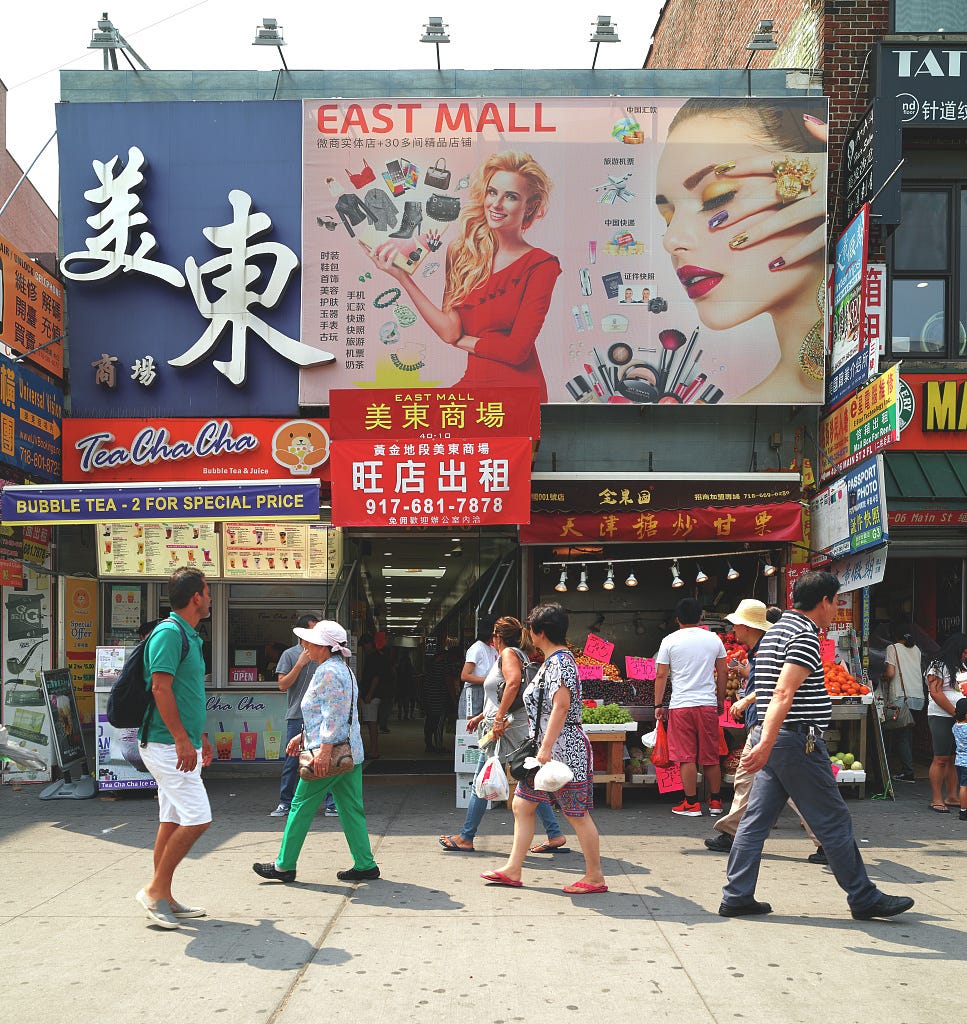
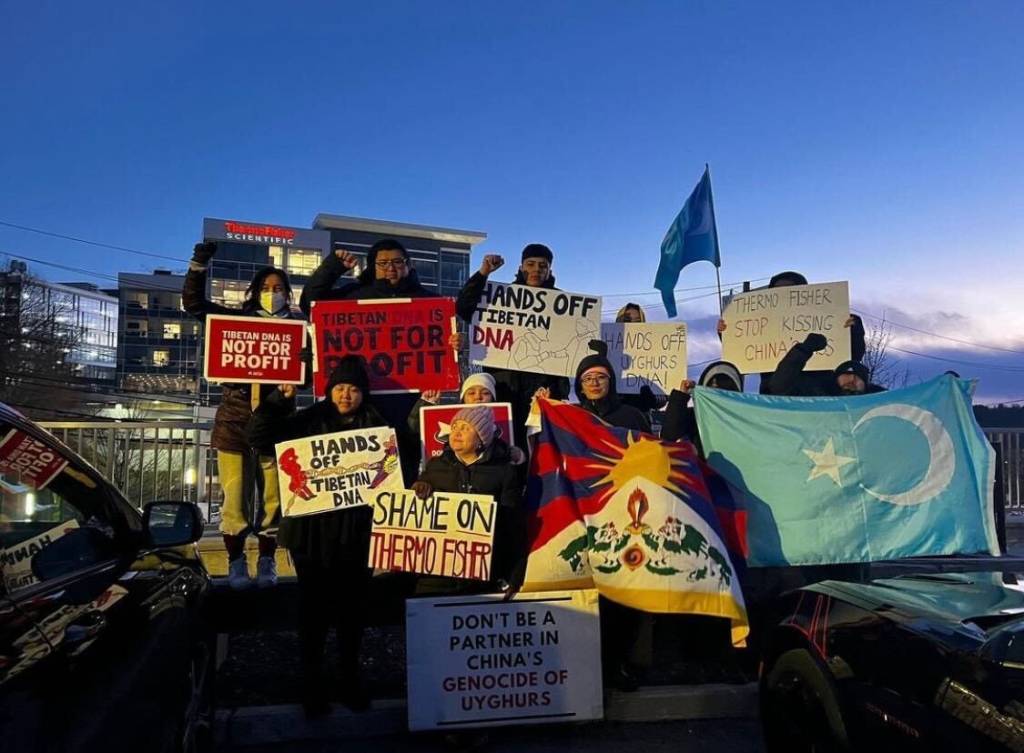
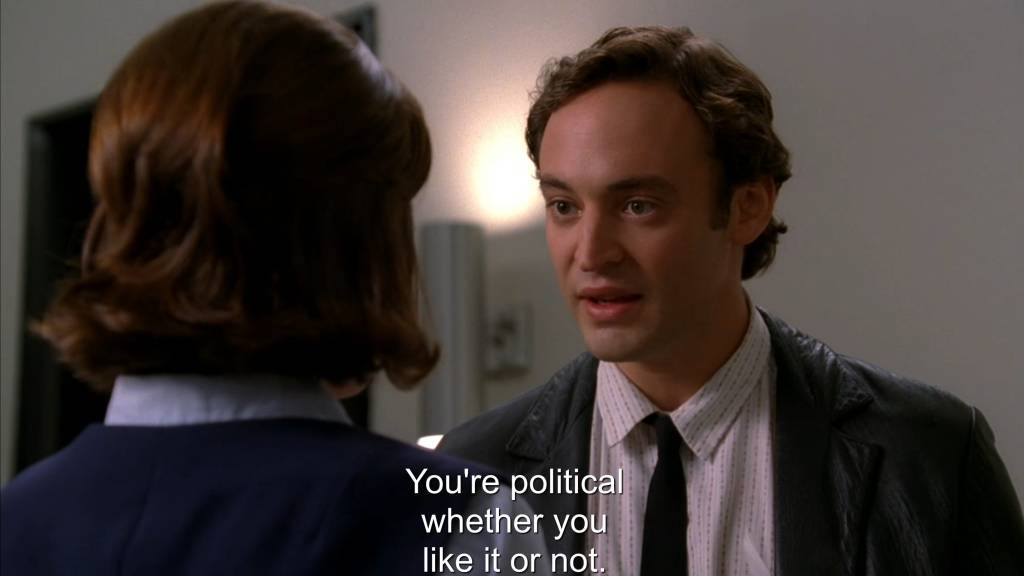
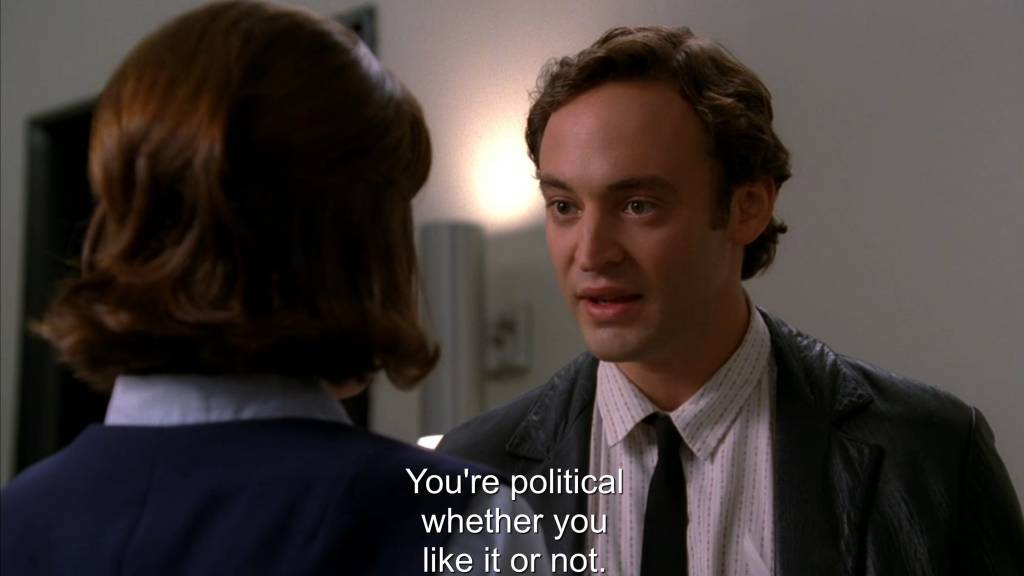
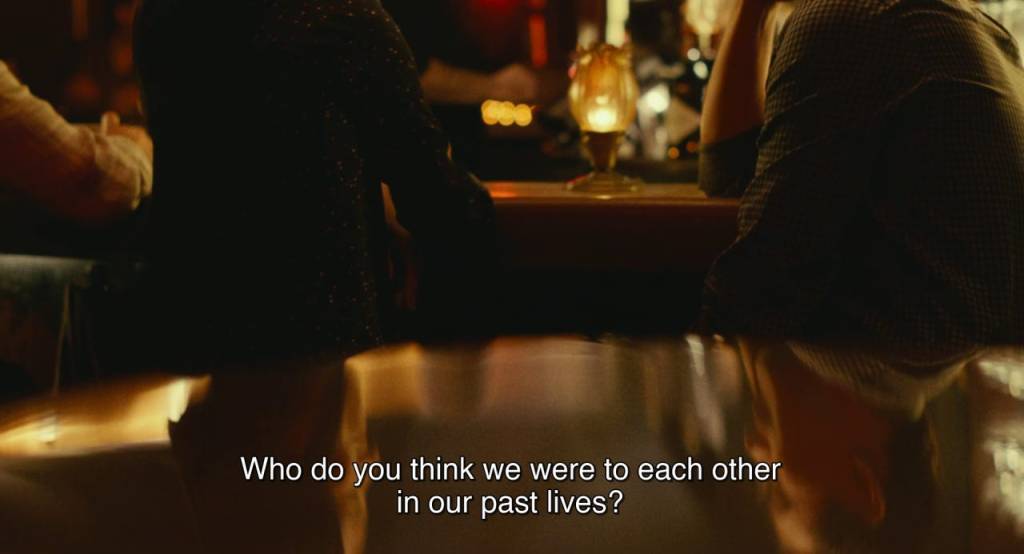

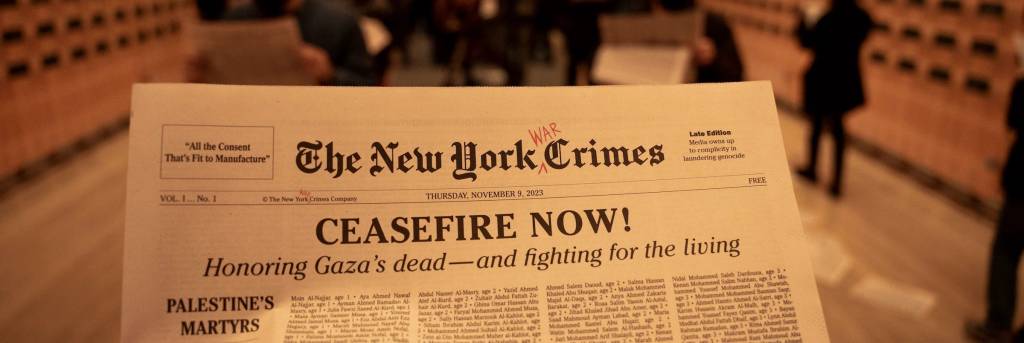
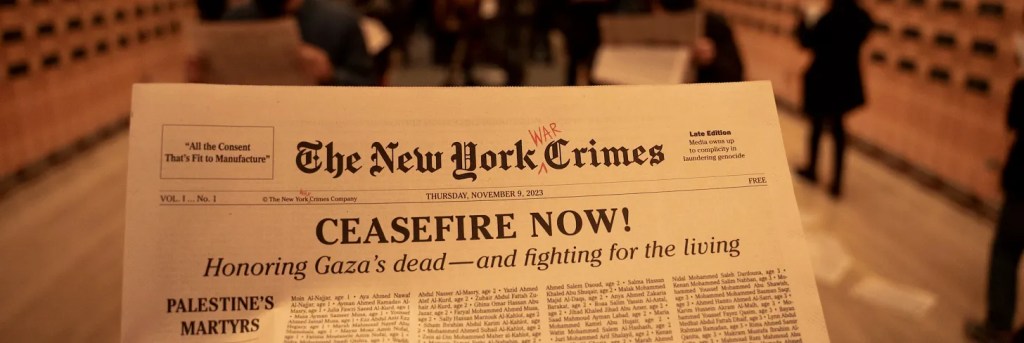
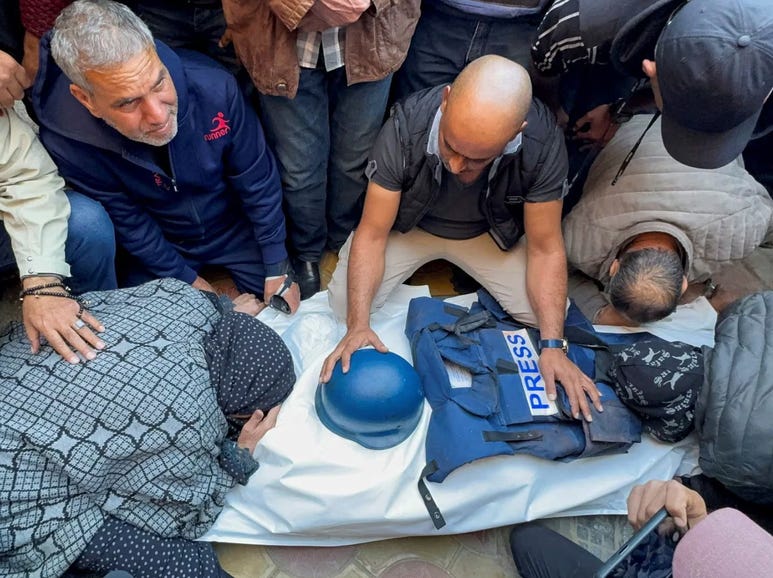


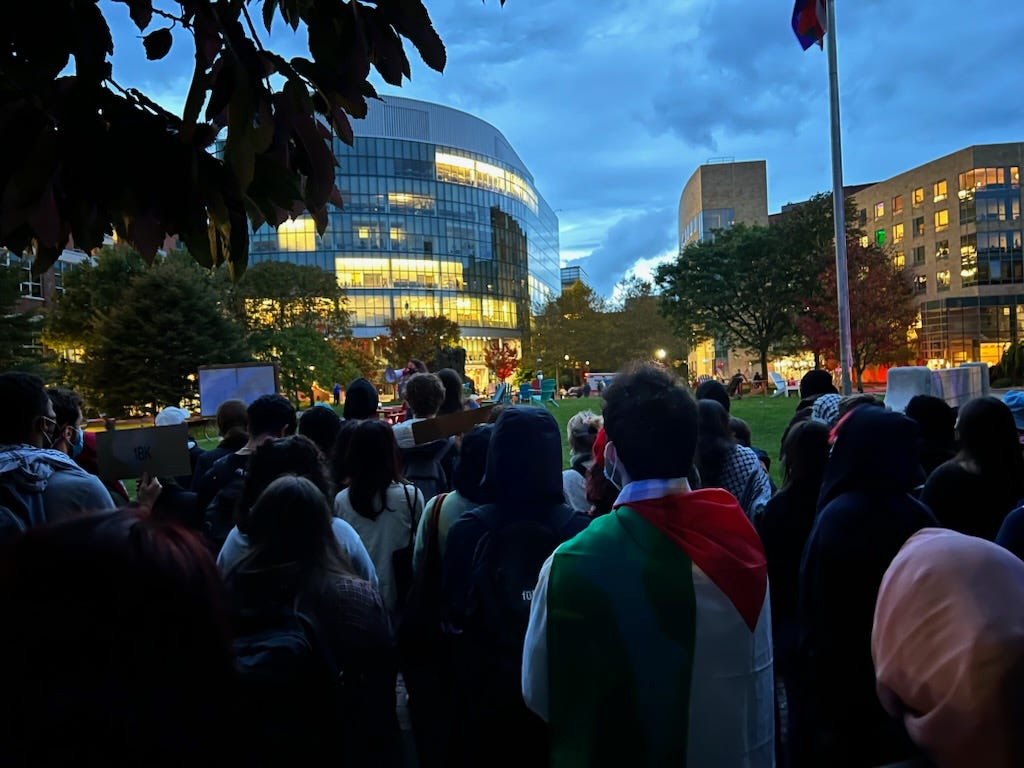
 illume magazine