
By Jesica Bak
APRIL 06, 2025
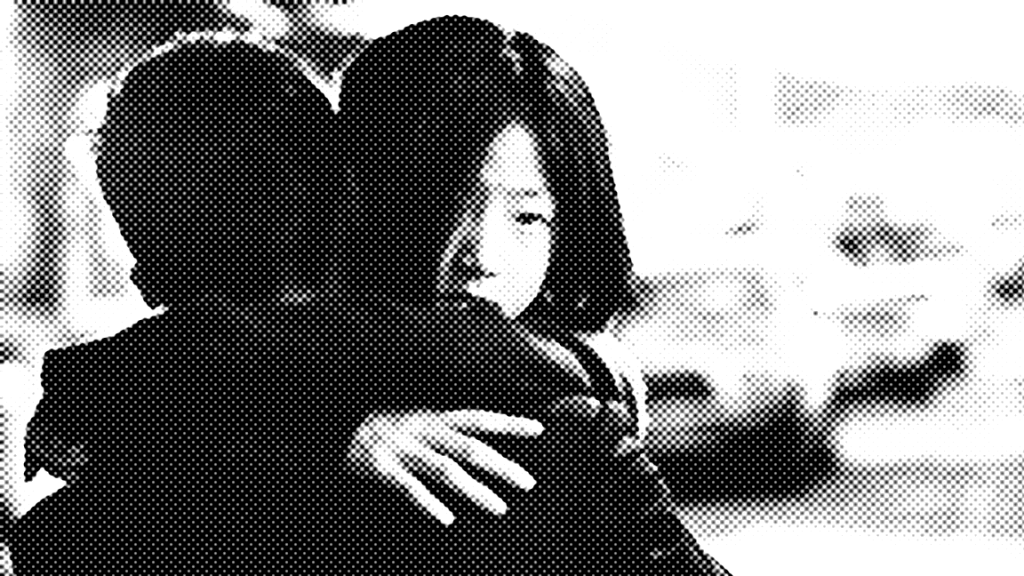
I recently went on a casual dinner date with a Korean man, which was perhaps my fault. I knew I was never going to see him again because at some point during the dinner, he started to feel comfortable—solely on the basis of our shared Korean ethnicity and not anything I had expressed—making casually racist, misogynistic, and other bigoted comments to me. He asked me what kinds of films I like, and when I told him I recently watched The Man From Nowhere—the 2009 Korean action–thriller blockbuster about an ex-special forces agent (famously played by Won Bin)’s legendary search for his 10-year-old neighbor who has been kidnapped by drug and organ-traffickers—my dinner date flippantly laughed and said, “Right, that little girl is dead now.”
I remember being unsurprised by his comment, only reminded once again of the dehumanizing and degrading ways in which men often consume news about women whose lives have been unfairly taken. Just the other day, I was having a very different conversation with my close female friend about that “little girl”; the female actress who rose to fame by playing Jeong So-Mi, the kidnapped child, in The Man From Nowhere when she was only about 10 years old; the female actress whose name my dinner date didn’t even bother to invoke when referring to her death.
Making Korean headlines these days, Kim Sae-Ron recently committed suicide at 24 years old after facing years of national public harassment and scrutiny for having committed a DUI in May 2022 that reportedly resulted in a damaged electrical transformer box, some nearby power outages, and unspecified impacts on nearby stores. The Seoul Central District Court fined her 20 million won (about 13,850 U.S. dollars), she paid an additional 700 million won in private legal settlement fees, her contract with her agency Gold Medalist was cancelled, and her career henceforth was effectively and permanently ruined. After Kim’s passing, her acquaintance revealed to the media group Osen that the incident had caused irreparable financial damage and the actress was forced to change her name to Kim Ah-Im to work part-time at a café until she was recognized by citizens and terminated from the position as well.
It’d be easy to chalk up Kim’s suicide to another celebrity tragedy partially caused by K-netizens, notorious around the world for malicious comments and online bullying. Juwon Park, the Asia entertainment editor for the Associated Press, wrote on X three days after Kim Sae-Ron was found dead in her home:
Korean media and the public tend to deliver immediate social condemnation for certain offenses (i.g. sex crimes) and, interestingly, cases of infidelity… Yet with drug-related or DUI incidents, public response varies significantly. Some celebrities return to their careers after ‘showing remorse,’ while others fade from public view without another chance. What determines the path to redemption? Gender? PR strategy? Luck?
Park is right to ask about the inconsistency in the national scrutiny and subsequent redemption offered to celebrities and public figures in Korea; she is also right to point to gender as, I’d argue, the main variable determining the said path to redemption. But Park perhaps didn’t have space to note that even after her DUI incident, Kim Sae-Ron had received new waves of backlash for posting a photo on her Instagram story with her then-boyfriend, beloved actor Kim Soo-Hyun. Since her passing, her family has revealed that the actor, one of the highest-paid actors in the nation and a global symbol of K-dramas, had been dating her since she was a minor.
It is impossible to read news related to the late actress and not be reminded of Sulli, the late member of the K-pop group f(x) who similarly committed suicide in 2019 after years of facing relentless public harassment and vitriol, and whom I think of every year around March 29 because we share our birthdays. One could argue that Sulli was a more explicit victim of Korean sexism and misogyny, particularly having grown up in an industry that notoriously treats its youth as little more than commodified and sexualized products curated for cultural and economic export. Fans on Reddit (r/kpophelp) still exclaim how ridiculous it was to have witnessed the bizarre, and eventually deadly, hate invented by K-netizens having to do with Sulli’s expressed sexuality on social media—which, in this case, means having posted “braless” photos, selfies with a banana, and some pictures drinking alcohol or going to the club with friends—as well as her age-gap relationship with Dynamic Duo artist Choiza.
But the way I see it, the ways in which Kim Sae-Ron and Sulli were both exploited for entertainment and subsequently discarded by the public, the nation, and perhaps even the support systems in their respective lives, are two sides of the same coin presenting one of Korea’s most pressing issues today: increasingly popular far-right calls for the elimination of women’s rights and what appears to be increasingly blatant violence against women. I mean not to exclude the issues of the country’s increasing economic precarity, the entertainment industry’s exploitation of artists, or social isolation and depression, which are also urgent and pressing for Korean men and male artists. However, for women in Korea, these issues are always stratified along lines of gender and sexuality.
I have always been critical of the Hallyu wave propagandizing and romanticizing the nation when out of all of the OECD countries, South Korea now holds the highest suicide rate, the rate for longest working-hours, and the greatest gender wage gap. A sweet spot for studying neoliberalism in East Asia, South Korea’s rapid capitalist development and global domination have made it urgent to interrogate this question: as a country modernizes and works towards the political and economic project of futurity, how are high and low-value subjects produced and reinforced? In the project of so-called innovation, who is exploited and who benefits from this exploitation? I think about these questions when, for example, South Korea remains the country “most targeted by deepfake pornography last year,” with female South Korean actresses and singers reportedly making up more than half of the people featured in deepfake porn worldwide. A recent high-profile case from October 2024 highlighted the nation’s struggle to embrace AI when two male alumni of Seoul National University were charged for having created and disseminated nearly 2,000 AI-generated pornographic photos of women from the university. The pair also wrote messages on Telegram such as, “Rape is the answer for feminists.” But the prosecution of these men is rare—Hyung-Jin Kim for the AP reports that a vast majority of deepfake perpetrators in the nation receive suspended terms, fines, or not-guilty verdicts—as is any form of social condemnation that could potentially ruin their careers, their sense of selfhood and safety, their relationships with loved ones, or their lives.
My mother, my sister, and I had a very difficult time rewatching The Man From Nowhere, a film that, while classically beautiful in its neo-noirism, is entirely predicated on the transnational capital movement of drugs and sex, child, and organ trafficking. At one point in the film when Won Bin’s character is about to kill the younger of the drug lord brothers before freeing enslaved child laborers at a drug manufacturing plant, the drug lord whines that these are children whose parents didn’t want them anyway. I could’t help thinking that this comment was true, but only because they are the children of women who are impoverished sex workers and dancers at the clubs where the drug lords do their recruiting and trafficking in the first place.
The women, like So-Mi’s mother, who also became involved in the scheme from dancing at the drug lords’ nightclub, are either entirely absent from the film or their presence is marked only by their harvested corpses shoved into the trunks of cars or backs of abandoned ambulances. But the film and its legendary story wouldn’t exist without their exploitation, their suffering that is sexualized even in their cruel deaths, and then their children’s suffering and deaths. The women and children in the film aren’t just victims of men; they’re victims of the restructured biopolitical systems of global capitalism that have generated a capital imperative for a trafficking market in the first place. Under this system, women become sex workers who are vulnerable to trafficking, and they are then forced to give birth to children who are subject to the same systems.
We almost stopped watching during Kim Sae-Ron’s famous monologue in the film, which is really about the ways in which the adults in her life—her mother, her teacher, Won Bin’s ahjussi—have failed to protect her from abuse. Setting up the catalyst for the rest of the film and Won Bin’s guilt-driven quest to save So-Mi from her mother’s fate, she tells him, “I don’t hate you. Because if I do, I won’t have anyone I like… So I won’t hate you.”
Jesica Bak is the editor-in-chief of Illume Magazine.
 illume magazine
Leave a comment