
If Hawaiian tourism is inextricably rooted in the U.S. colonial project, is it possible to shift to a model of tourism that no longer exploits the resources and values that belong to Kanaka Maoli?
By Malia Ching
FEB 20, 2024
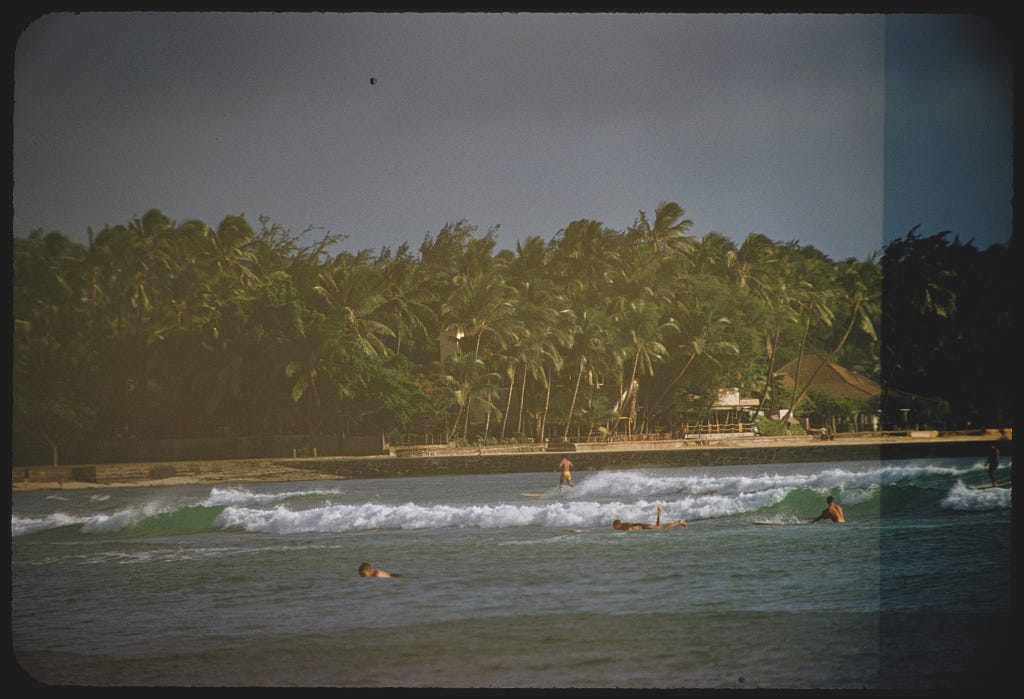
Today, there are hundreds, if not thousands, of TikToks romanticizing Hawaiʻi. A quick search of “Hawaiʻi” on the popular social media app generates a barrage of video clips of the scenic Pali Highway drive, sunsets from catamarans, fire dancers at lū`aus, and an infinite amount of beach clips all playing to the soundtrack of Lilo and Stitch’s “Hawaiian Rollercoaster Ride.” Interspersed between these idyllic clips are videos urging tourists and short-term residents to stay away from the islands, with some videos even calling for a complete tourism ban.
To many, Hawaiʻi is the dream destination depicted in these TikToks.
To Kanaka Maoli, or Native Hawaiians, Hawaiʻi is an ancestral home—one that was stolen and subjected to oppression and exploitation for over a century. Hawaiʻi is a land in distress, perpetually stuck in the battle for sovereignty. To kamaʻāina, or long-time Hawaiʻi residents, Hawaiʻi has become their home through generations of family members living in the islands.
The dissonance in realities between these Hawaiʻis has recently entered the mainstream conversation, especially after COVID-19 and the Maui fires highlighted how diametrically opposed the tourism industry—which has poured billions of dollars into the islands—is to the health of Hawaiʻi’s land and people. These events, which substantially decreased the state’s visitor count for extended periods of time, have heightened the awareness of both the beneficial and detrimental impacts tourism exerts on the islands. During the March 2020 lockdowns, daily visitor arrivals dropped to less than 500, while unemployment rates rose to nearly 24%, wreaking havoc on the state’s economy. The deadly wildfires on Maui caused another drop in tourism and travel, costing the state $11 million daily. Air Maui, a helicopter tour agency went from flying 25 to 30 flights a day to just one or two daily flights. The pandemic and fires were thus recent reminders of the complex entanglement between the ongoing anti-colonial struggle, the survival of local families, and the state’s economy. Tourism has become increasingly controversial among kamaʻāina, Kanaka Maoli, and even some visitors, leaving many to question the future of the industry in the state.
Yet, this dichotomy excludes a possible third Hawaiʻi: a Hawaiʻi that recognizes its reliance on tourism spending and is trying to redefine what being a “tourist” means. Over the past few years, state leaders, organizations, and communities have been considering and experimenting with a new form of tourism: regenerative, sustainable tourism. This new framework would require restructuring Hawaiʻi’s tourism industry into a more sustainable, educational, and culturally sensitive experience for all involved parties. This model would encompass sharing the full history of Hawaiʻi and its culture, including how the state’s tourism industry is inherently rooted in its colonization by the U.S. empire.
The U.S. Colonial Project: Hawaiʻi Tourism
A once thriving, respected nation, the Kingdom of Hawaiʻi continues to grapple with its colonial legacies. In 1820, the first Christian missionaries arrived in the islands, befriending and converting many of the Kingdom’s aliʻi, or nobility, to Christianity. In the next decade, under missionary influence, Queen Kaʻahumanu pivoted the Kingdom away from its traditional cultural practices, implementing new laws that incorporated Christian beliefs and values. Kaʻahumanu’s new policies included banning hula in public spaces—a law that remained in place for four decades, outliving Kaʻahumanu.
By 1893, the Kingdom of Hawaiʻi, a sovereign nation, was illegally overthrown by American businessmen in a U.S.-backed coup, resulting in the creation of the Republic of Hawaiʻi. The dethroning of the Kingdom’s queen, Liliʻuokalani, was possible in part because the U.S.’s interests in developing a capitalist economy—predicated on significant land redistribution and a booming sugar industry—had already been established.
Assimilation policies under the new republic included a ban of ʻŌlelo Hawaiʻi, the indigenous language of Hawaiʻi, in public schools. Parents were admonished for speaking to their children in ʻŌlelo Hawaiʻi, and government business was required to be conducted in English. These assimilation policies ushered Hawaiian culture and language into a dark age. Hawai’i was annexed to the U.S. in 1898 despite a petition signed by the majority of the Kanaka Maoli population urging Congress to halt the annexation. By the turn of the century, Hawai’i became a U.S. territory; three years later, the Hawaiian Promotion Committee was created to expand tourist travel to the islands; and in 1959, Hawaiʻi became America’s 50th state.
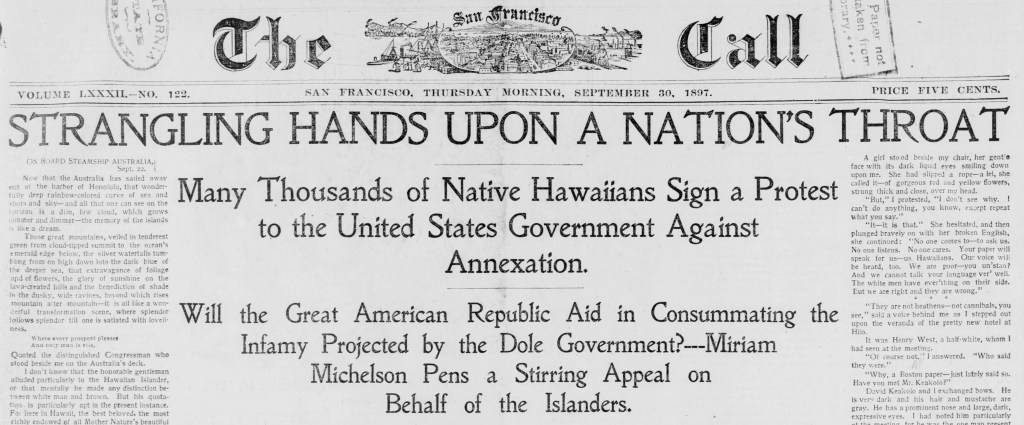
To criticize Hawaiʻi’s tourism industry without criticizing the U.S. colonial project is ahistorical. Yet, narratives hoping to frame the tourism industry in a positive light, often exclude discussions about the sector’s direct ties to American colonization. Instead, these narratives highlight the fact that tourism is the state’s largest single source of private capital, and comprises roughly a quarter of the state’s annual gross domestic product; that visitor spending in 2022 brought the state $2.24 billion in tax revenue; and that before the pandemic and ensuing layoffs, the tourism industry supported 217,000 local jobs. This narrative argues that tourism provides employment for Kanaka Maoli and kamaʻāina, and yields successful economic returns for the islands.
But who are the beneficiaries of this capital? And who is being harmed at the expense of generating this wealth? As of 2023, 67% of residents think Hawaiʻi is catering to tourists at the expense of Kanaka Maoli and kamaʻāina, and in 2021, less than half of Hawaiʻi residents thought tourism contributed more benefits than problems to the state. Many Kanaka Maoli and kamaʻāina are frustrated with the amount of tourists flooding the state with little regard for the islands and their people—one such source of frustration being tourism’s contribution to traffic. On Oʻahu, many roads outside of Honolulu, including the popular road through Haleʻiwa, are single lanes in each direction, which bottlenecks the flow of cars. These conditions make it extremely difficult for locals who need to use the road for daily travel.
The tourism industry’s extractive practices also extend to the land, draining the state’s natural resources and destroying native ecosystems. On Hawaiʻi Island, just five tourism sectors—accommodations, restaurants, golf courses, car rentals, and tours—account for 21.7% of the island’s energy consumption, 44.7% of its water consumption, and 10.7% of its waste generation. On Oʻahu during the pandemic, a 1.0% decrease in a hotel’s occupancy was associated with a 0.46% reduction in the hotel’s water consumption. In a state with finite resources and square footage, tourism consumes disproportionate amounts of the islands’ resources and increasingly displaces Kanaka Maoli and kamaʻāina from their homes.
According to census data, as of 2020, 53% of Kanaka Maoli live outside of Hawaiʻi, and Kanaka Maoli populations on the continent are growing five times faster than Kanaka Maoli populations in Hawaiʻi. Las Vegas has been dubbed “The Ninth Island” because of its large Kanaka Maoli and Pacific Islander communities. As of 2023 on Oʻahu, the island with the highest per capita homeless population, 35% of houseless individuals identified as Kanaka Maoli or Pacific Islander. Affluent outsiders are increasingly out-buying Kanaka Maoli and kamaʻāina for land.
Tourism and Militarism
Rooted in settler-colonialism, the tourism sector in Hawaiʻi is inextricably linked with American militarization. The state’s location in the Pacific makes it a critical asset for cementing U.S. control in the region. Over 250,000 military personnel and their families live in Hawaiʻi, comprising nearly 20% of the state’s population, and the military controls significant amounts of land in the islands. The Department of Defense pours billions of dollars into the state, making it the second largest driver of Hawaii’s economy, behind tourism. The two industries work together to effectively diminish and abuse the island’s resources—the Red Hill fuel leaks and the Kahoʻolawe bombings demonstrate the military’s legacy of abuse—while also contributing significantly to the economy. For example, the military-built interstate highway system on Oʻahu, initially constructed to connect military bases, now enables convenient travel for tourists, effectively spreading tourism and its impacts around the island. The significance of Pearl Harbor—which welcomes over 2 million annual visitors, and is not only a designated National Historic Landmark, but is also being maintained as an active U.S. naval base—cannot be understated in understanding how the military and tourist sectors enable each other.
During the pandemic, when tourist numbers dropped, the islands breathed a sigh of relief. Locals reconnected with spots normally overrun by tourists, and the land was able to recuperate after years of constant, reckless foot traffic. Hanauma Bay, a popular Oʻahu tourist destination, experienced significant levels of recovery. The bay’s water turbidity decreased, increasing visibility by several meters, and the number of large fish and monk seals frequenting the bay swelled. After decades of excessive tourism, tourist spots were desolate—a phenomenon few, if any, Kanaka Maoli and kamaʻāina, had ever experienced.
The Modern Hawaiian Sovereignty Movement
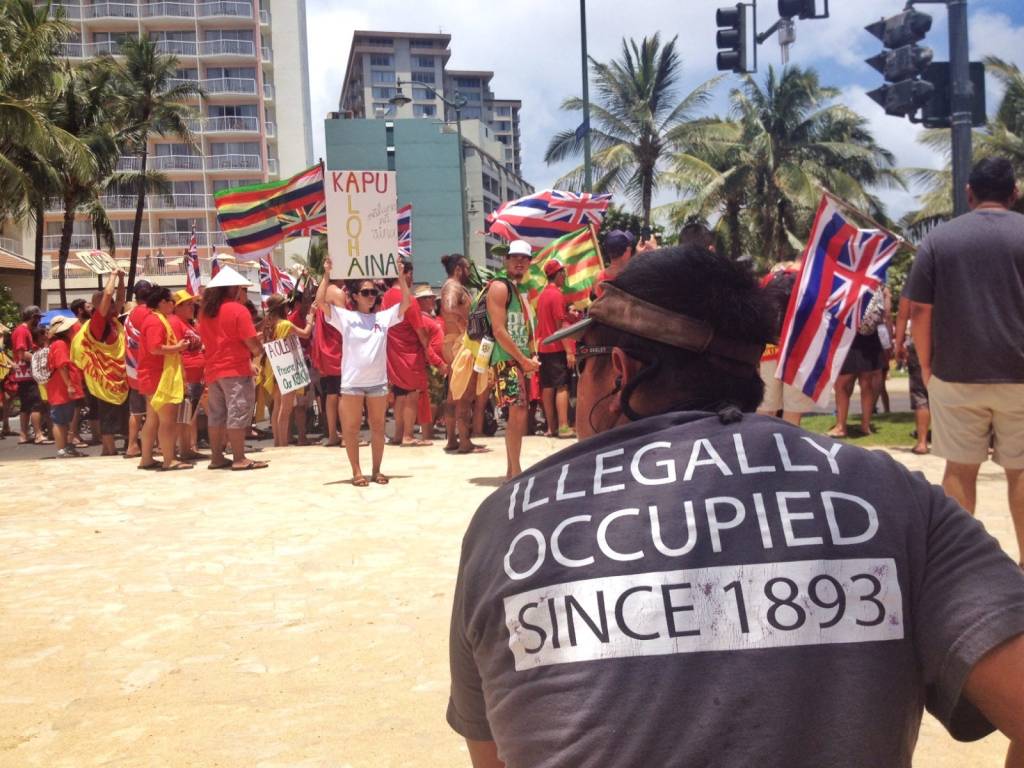
Activists, writers, and scholars today continue to view tourism as an extension of America’s occupation of the Kingdom of Hawaiʻi. The Hawaiian sovereignty movement remains strong and unyielding, fueled by the continued exploitation of the islands by the military and tourism industries. The late Dr. Haunani-Kay Trask, a Kanaka Maoli scholar and prominent leader of the sovereignty movement, vehemently opposed the tourism industry, considering it “cultural prostitution.”
Kanaka Maoli are resilient. They continue to fight for their sovereignty, the preservation of their land, and their people. In the 1970s, the modern Hawaiian Renaissance sparked a new devotion to ʻŌlelo Hawaiʻi, cultural practices, and activism focused on demilitarization and land development. In 1978, over eight decades after it was banned,ʻŌlelo Hawaiʻi became the official state language (along with English). The Hōkūleʻa, a waʻa kaulua, or a traditional double-hulled voyaging canoe, was completed and launched in 1975 in an attempt to revive Polynesian wayfinding. In 2017, she completed her worldwide voyage with navigators using only traditional wayfinding techniques.
As the U.S. increased its grip on the Kingdom, Kanaka Maoli resistance continued to deploy creative political forms. More recently, the late Hawaiʻi Senator, Daniel Akaka, attempted multiple times to pass the Akaka Bill, which would not only create a recognition system for Kanaka Maoli similar to existing Indigenous tribal policies but reaffirm Kanaka Maoli’s right to self-determination. Resistance-inspired anthems like “Hawaiʻi ‘78,” made famous by Israel Kamakawiwoʻole, and Liko Martin’s “All Hawaiʻi Stand Together” have become popular listening in the islands. Inverted Hawaiian flags—an international symbol of distress—are flown around the state, symbolizing the Kingdom’s oppression by the U.S., as well as its industries, including tourism, modern science (most recently, the Thirty Meter Telescope on Hawaiʻi Island’s Mauna Kea), and the military.
The fight led by Dr. Trask and many others continues today. After the Maui fires, Maui residents and supporters delivered a petition with 14,000 signatures to the Governor—who focused primarily on unemployment numbers intensified by the closure of West Maui—pleading for a delay in reopening the area most affected by the fires to tourists. The petition was ultimately denied, and the reopening of West Maui started at the Kapalua Ritz-Carlton. The pandemic and Maui fires intensified the tourism debate on both sides of the spectrum, paving the way for the more moderate stance of creating a sustainable, regenerative tourism sector to gain more prominence.
The 2023 Native Hawaiian Convention showcased what regenerative tourism could look like from the Kanaka Maoli perspective, and organizations, like the Hawaiʻi Tourism Authority (HTA), are focusing on creating a more sustainable tourism model. However, the exact definition of “sustainable tourism” and how to achieve it is still being discerned in the context of Hawaiʻi. The HTA published a Destination Management Action Plan for Oʻahu that outlines broad steps the state can take between 2021 and 2024 to relieve some of the pressure tourism places on Oʻahu’s resources and communities. While the effectiveness of the plan is yet to be assessed, it includes reducing the amount of illegal short-term rentals on the island, promoting local products, and managing the number of rental vehicles on the roads.
Reviving Aloha
To many, Hawaiʻi will remain an idyllic paradise. There will always be visitors who want to visit Haleʻiwa, get married at sunset on a beach in Kona, and learn to surf in Waikīkī. These experiences are a part of the reason many visitors depart the islands feeling connected to the state, and why they repeatedly return to the islands. The importance of Hawaiʻi to visitors became extremely evident in the aftermath of the Maui fires, when just over a month after the fires started, the state had already received over $120 million from over 200,000 donors from 67 countries.
The state’s motto, “ua mau ke ea o ka ʻāina i ka pono” is popularly translated as “the life of the land is perpetuated in righteousness.” However, the phrase also has a deeper meaning that embodies the fight for the Kingdom of Hawaiʻi. When King Kamehameha III spoke these words to his Kingdom in 1843, “ea” did not mean “life.” In the context of the king’s speech, “ea” meant “sovereignty.” To Kanaka Maoli, ʻāina encompasses more than just land. It means “that which feeds,” and encapsulates the relationship Kanaka Maoli have with their home, their land, and each other. Thus, “ua mau ke ea o ka ʻāina i ka pono,” is not only talking about the sovereignty of the Kingdom’s land, but the freedom of its people, its resources, and its culture.
The Hawaiʻi of tourists’ dreams and the Hawaiʻi for Kanaka Maoli cannot sustainably coexist. For too long, visitors’ experiences of Hawaiʻi have been built on the backs of Kanaka Maoli. It is time to shift to a model of tourism that no longer exploits the resources and values that belong to Kanaka Maoli. In Hawaiʻi, aloha means more than “hello” and “goodbye.” It means to give unconditionally, without any expectation of return—something Kanaka Maoli have been doing for centuries. It is time to return the spirit of aloha to Kanaka Maoli as we look to merge the two Hawaiʻis into one.
Malia Ching is an environmental studies and international affairs major at Northeastern University.
 illume magazine
Leave a comment