
Illume speaks with the Associate Director of Asian American Studies at Northeastern Denise Khor, and Assistant Professor Sasha Sabherwal.
By Jesica Bak
FEB 19, 2024
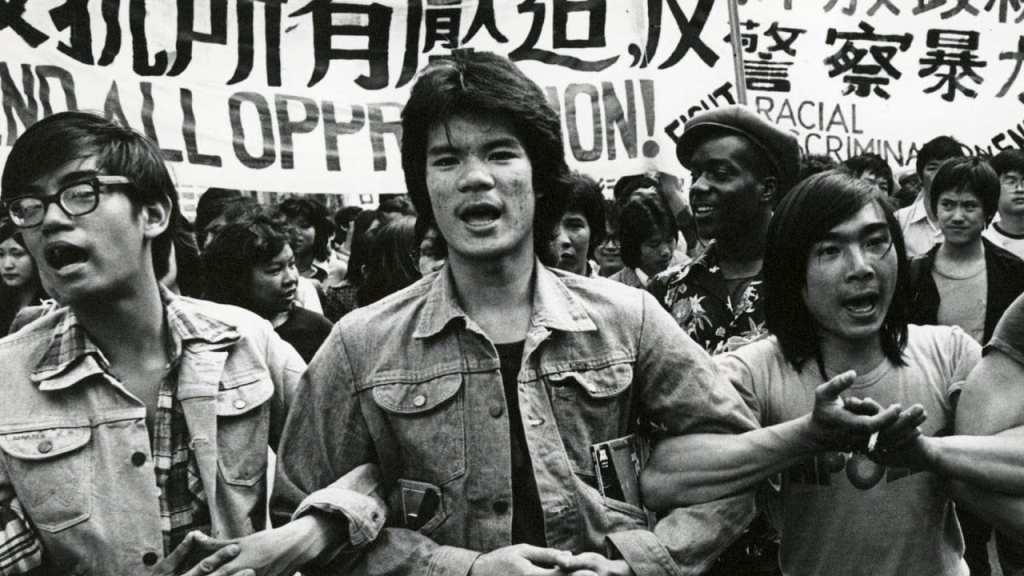
Beyond interviews and Q&A structures, Illume’s “Conversational Ruptures” series is about explicating the foundational tenets that make up our relationship with Asian and Pacific Islander American ideas, issues, and identities: what are the questions our communities haven’t yet asked, are afraid to ask, or have not yet figured out how to articulate?
In our latest piece, we attempt to demystify the Asian American Studies program at Northeastern University, and what the discipline holds at stake for understanding the two main ruptures we witness in the transnationality of Asian America: the ongoing Israeli genocide perpetrated against Palestinians as we speak, and the aftermath of the Supreme Court’s overturn of decades of affirmative action precedent in the U.S. In order to do so, we spoke with Associate Professor Denise Khor, a media historian and the Associate Director of Asian American Studies at Northeastern, and Assistant Professor Sasha Sabherwal, a cultural anthropologist of Global Asian Studies.
This transcript has been edited for length and clarity.
Jesica Bak: Firstly, could you each speak a little about how you became students, and eventually, academics and professors of Asian American Studies?
Denise Khor: I went to school at the University of Florida, and I actually studied English and women’s and gender studies. Only towards the very end of my studies, I was awakened by a professor named Amitava Kumar, and realized that I had been missing so much of my education, and I was so eager to pursue a sort of education around the study of race and ethnicity and in Asian American studies. I had, at that point, thought I was going to law school, [but] I ended up going to graduate school [for] ethnic studies at the University of California, San Diego, and it was really fortuitous. I don’t think I knew it at the time, but that program was really kind of at the cutting edge of the field in many ways. It was a program that was from its inception, comparative, transnational, [and] a moment of thinking about very critically the ways in which the nation has formed this particular kind of framing for ethnic studies [and] American studies.
Sasha Sabherwal: It is so true that California is such an important site for ethnic studies. I grew up in California and I went to school at UC Irvine. I similarly thought I wanted to go to law school, so I took a lot of political science courses, and I ended up taking a class in feminist studies with an adjunct: her name was Priya Shah. I think it was the first time I really witnessed the power and potential of a classroom, so I shifted my major to women’s, gender, [and] sexuality studies. And I had really amazing mentors who—I was a first generation college student—showed me how classrooms can be these radical sites for transformation and liberation. We read things I had never read before—the prison industrial complex, the racialization of Muslim communities, Islamophobia—and those were feminist issues. It was [a] really formative intervention in my life to understand feminism, not just as a study of objects—like the study of women—but also as a kind of tool or analytic or a kind of approach or method for thinking about the world and research. I applied for graduate school and I ended up getting admitted into an American studies program at Yale.
JB: It sounds like you are drawing a clear distinction between American studies and ethnic studies. Could you elaborate on that distinction?
SS: Ethnic studies, as a sort of emergence, is really rooted in the 1970s and the San Francisco State University strike, the UC Berkeley strike, the demands for third world solidarity, and allying with Third World Liberation Front. I also think there has been a transformation of American Studies as a kind of civilizational program to one that really complicates ideas about American-ness and poses questions around the boundaries of America, the borders of what counts as America—so we’re thinking about Central America, South America, the Americas, plural—and so one that is thinking about these questions of power.
DK: The only thing I would add to that is that for ethnic studies, it emerged in the 60s and 70s from the bottom up and as very much a student-led set of movements that brought the critique of knowledge production at the university, converging with the social movements that [were] taking place at that time period, like the anti-Vietnam War movement, the civil rights movement, nationalist movements, the movements for decolonization. So, when we think about institutionalization, it’s always sort of held in tension with those histories.
SS: Many feminist scholars have critiqued the flattening of radical potential and possibilities of refusal when disciplines and ideas become institutionalized. [In] the question about what is valued among university spaces—what kind of courses exist, what kind of materials are being taught, what is silenced—especially when we think about questions around Palestine as Asian American Studies, there are many ruptures and limits around what happens when these radical sites are institutionalized.
JB: I feel like we covered so much ground and I didn’t even have to ask my actual question about the institutionalization of Asian American studies yet. I was going to first ask you both to speak about your respective research focuses and practices and how they align with your personal investments in Asian American studies, as well as how you believe both of your research intersects with each other or perhaps with other areas of studies.
DK: My first book is called “Transpacific Convergences: Race, Migration, and Japanese American Film Culture before World War Two.” It essentially looks at and recovers this history of early film production by Japanese Americans and looks at the circulation of films from Japan to the United States. It looks at the ways in which films circulated at any sort of noncommercial site… not for commercial theaters, but actually for agricultural houses and churches and community halls—that whole circuit that’s unfolding in the early 20th century. It’s also a way of thinking about: how do we think about history, how do we think about film and media history, how do we think about Asian American film and media history, which is often centered on and located in a post-1960s genealogy?
And the frame of my book is transpacific. Past studies of Japanese American history had been really focused nationally, and I think part of it is the ways in which scholars were really influenced and shaped by this idea of trying to show Japanese Americans as Americans first, because of the ways in which Japanese Americans were racialized leading up to World War II.
SS: Denise has also been doing this amazing piece of uncovering historic film[s] and then having screenings all over the U.S. It’s a larger intervention in film studies generally—and I think that that work is so important because it really historicizes our understanding of Asian Americans as creators, as artists, and [as a] part of cinema. I think my work is slightly different, in the sense that it’s much more contemporary. Within Asian American studies, I’m really interested in thinking about the South Asian diaspora, like where do South Asians fit into conversations about Asian America and specifically Asian North America; thinking about caste and gender within the community of Punjabi Sikhs living in Canada, in the U.S. and specifically in the Pacific Northwest.
So, thinking about contemporary migrant life, I’m really interested in how ideas about caste are made significant in the diaspora, despite generations settling in these communities since the early 20th century, and thinking about the continuities of caste [and] how they get remade and rearticulated within the diaspora. And the work is happening alongside a lot of activism that’s ongoing about caste in the South Asian American and South Asian Canadian communities. I’m also interested in how that intersects with ideas around gender and masculinity, especially among youth culture. How do they inherit some of these ideas? And how do they also resist some of these framings?
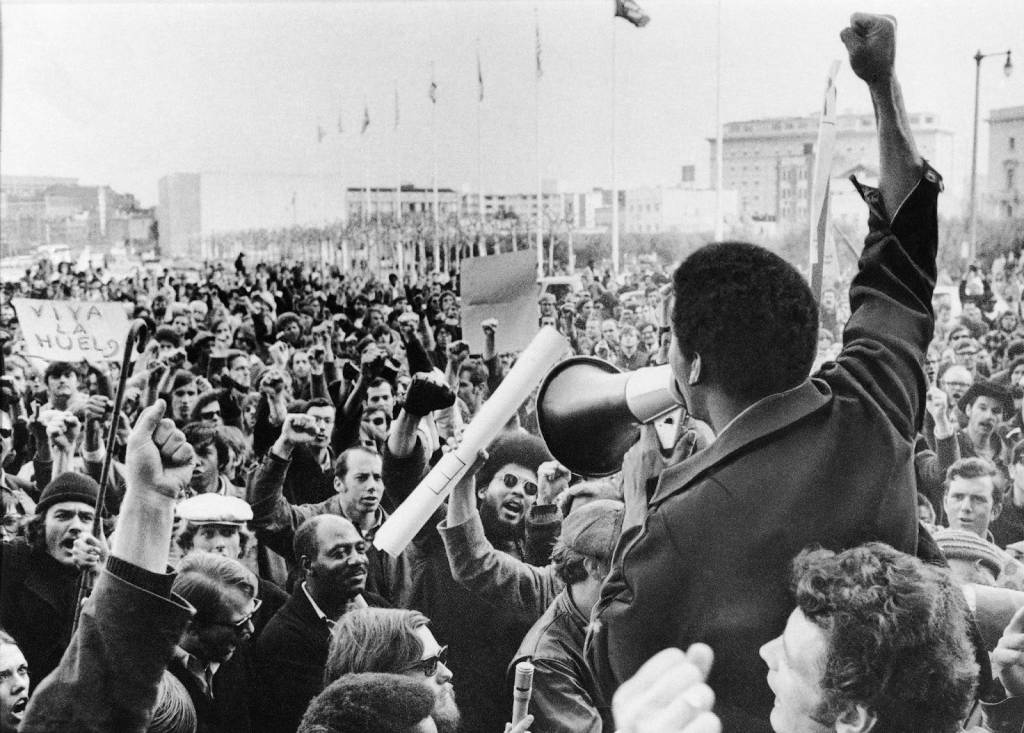
JB: I think this is a fitting place to continue our discussion from before about the institutionalization of Asian American Studies, which was both, historically, not only a direct result of demands made by student activists, but also made possible by the mobilization and impact of the Black Power movements at the time. As we’re discussing the various legacies of this history, from student activism to cross-racial solidarity, I wanted to shed some light on the ongoing imperial and colonial violence being perpetrated against Palestinians in Gaza right for the past two months, situated in the past 75 years, and to ask you how far you think Asian American studies, as a national institutionalized form of academia, has come today in addressing the “national struggle”? Where do we fall short?
SS: A lot of Asian American scholars have been insisting that Palestine is an issue that we have to think through as pedagogues and as people who are invested in liberation and thinking about how histories of settler-colonialism in Hawai’i are connected to these larger movements of decolonization. This is something that you’re gesturing to, Jesica, is the limits of institutionalization or the ways that we think and theorize decolonization. Like, what does that look like outside of the folks that we read or the pages of books that go through? Is it more than just abstract conversation? How do we enact decolonization in our lived experience? The demands that the folks were making for ethnic studies were about self-determination—it was about hiring faculty that look like us, it was about having accountability from the administration.
DK: One of the things that native Hawaiians have sort of taught the field is the ways in which the presence of Asian Americans [and] the kind of projects around civil rights that mobilize Asian Americans can actually also be colonial projects. I echo very much Sasha’s sentiments that we are in a very challenging place—student activism has been suppressed and criminalized in ways that I feel like I have not seen in my lifetime, and the ways in which there is this kind of Palestinian exception that we [can] see at play.
JB: I feel like both of you have gestured to this tension that students or academics have been facing and which there’s this irony in pontificating about everything—all of the horrors that are happening in Gaza right now—in our magazines and in literary production and on online discourse, and at the same time, there is a completely different reality happening in Gaza.
SS: The irony is so cruel. But I also think many Palestinians are calling for folks to really mobilize in these spaces, and it’s important to, at the very bare minimum, understand this long history not as a moment that begins in October, [but] expanding our timelines beyond Oct. 7, really thinking about this long 75-year conflict, thinking about how we’re connected to ideas around colonialism. In the classes that I teach, we think very closely and deeply about Islamophobia in the U.S. context, especially around 9/11 and how that becomes a sort of stopping point for understanding our relationship to Islamophobia, and we can’t understand the kind of global Islamophobia that’s being produced simultaneously and in the ways that we are complicit in it through these erasures and silences.
JB: And by [stopping point], you mean with 9/11 in the history of thinking about Islamophobia?
SS: Yeah, I think so. In my classes it seems like it’s very straightforward, it’s very accessible. We can have these conversations without a sense of discomfort or a sense that somehow there’s a violation taking place. And yet if you have the same kind of conversation about Zionism, about settler-colonialism, about Israeli nationalism, those produce very different kinds of feelings, attachments, and sentiments around safety.
JB: The next question I wanted to talk about [is] the term of Asian-American as an ethnic identity and how the movement’s adoption of pan-ethnicism was a deliberate political strategy. If the Asian American movement’s predication on pan-Asianness was a form of unification in the 60s and 70s, would you say that the term has today become conflated in the cultural imagination? And if so, I wanted to ask how we can challenge this obstacle of AAPI acting as a depoliticizing and conflating acronym.
DK: Any time that a category is being cohered, it’s always also producing exclusions. And I think that’s really politically important at various moments for specific reasons, to disaggregate that category of Asian American. When you’re talking about Cambodian American communities who have come here as refugees—who experience high rates of poverty—needing to be able to talk about the specificity of that community is really critical.
SS: I’m teaching Introduction to Asian American Studies, and a lot of the students in the class really complicate this idea of identifying as Asian American. Oftentimes, folks in the class will identify as Chinese American [or] Filipina American to take a kind of specificity around their affiliation with Asian America, and I think it’s a response to this notion of Asian Americans as perpetual foreigners. As Denise beautifully said, coherence produces exclusions, [but] I think simultaneously there is something really radical about this formation of our collective pan-ethnic identity because it does produce solidarity and coalition with Black, Indigenous, [and] Latinx communities, and to see those struggles as interconnected.
JB: One of the greatest issues that we see as currently facing the Asian American community is the contentious aftermath of the Supreme Court’s June 29 ruling, which not only effectively overturned decades of affirmative action precedent, but as a byproduct, we believe, used Asian Americans in the US as a racial medium and mechanism for keeping institutions predominantly white while utilizing the discourse of anti-Asian discrimination, meritocracy, diversity. Can you speak about some of the implications and consequences that you both believe have erupted from the ruling and the dominant narrative that surrounds the ruling? And hopefully, where we can go from here?
SS: So much of that ruling relies on ideas about the model minority and the ways that we think about Asians in the U.S. as the good immigrant, those who have professionalized, who have been able to work, pick themselves up from their bootstraps and really affirm ideas about America, the American dream and meritocracy. In my class, I really stress this point of how model minority and yellow peril are two sides of the same coin, and the co-optation of anti-Asian violence in the name of white supremacy and the maintenance of institutions as brilliantly white spaces. We are doing admissions for graduate programs in the PhD program in sociology, and we have certain limitations, like we don’t know the context of the applicants. It essentially will further the whitewashing of institutional spaces, and weaponizes the ways that we understand these histories of anti-Asian violence in the name of preserving certain kinds of supremacy within these spaces.
DK: Part of what is at issue with the affirmative action debates is this idea of the model minority myth and that that idea is very relational, right? So if Asian Americans are the model, then who is not the model? We can look at many moments throughout our history in which those ideas are sort of mobilized exactly in that way to pit [Asian Americans] against other minority groups.
JB: For me, the pitting of Black and Asian communities [against each other] is a major consequence of the ruling and the discourse surrounding the ruling that I’m very afraid of, especially with last week’s LA Times article about affirmative action.
SS: I think the hopeful note is you writing this and sharing this; thinking through some of these very difficult and challenging moments and conversations.
Editor’s Corrections: Professor Sasha Sabherwal is an Assistant Professor of Cultural Anthropology and Global Asian Studies, not an Associate Professor, at Northeastern University. Also in the initial version of this story, Denise Khor’s response to the pan-ethnic term of “Asian American,” called to “desegregate that category of Asian American”.” Professor Khor’s comment has now been corrected to “disaggregate that category of Asian American.” (Corrections made Feb. 20, 2024, 12:57 p.m.)
Jesica Bak is the editor-in-chief of Illume Magazine.
 illume magazine
Leave a comment